
2,100+
Hours of calls processed, as reported 2025
~2 years
Of calls in the account
How an E-Commerce Manufacturer Turns Calls Into Insights
E-commerce & retail · Call scoring & coaching
Read the case study →

A legal research firm uses Speak AI to transcribe every research call and list each question asked, cutting the check that a scripted question was asked from about 45 minutes of listening to about 6 minutes, per the firm.
The firm runs research calls from a script, and each call has to be checked to confirm every scripted question was asked. Reviewers did this by listening, so only a small share of calls could be checked.
It sends every call to Speak, where each becomes a transcript. A prompt lists every question asked, so a reviewer can compare the list to the script, open the exact moment and export a clip for coaching.
Thousands of calls come in each quarter from a team of regular uploaders. The firm reports the check now takes about 6 minutes rather than about 45.

Confirming that every scripted question was asked meant about 45 minutes of listening per call.
Speak transcribes the call and lists every question asked, so reviewers compare the list to the script.
The same check takes about 6 minutes, and coaching starts from an exported clip.
With a scripted call, a missed question can matter. The only dependable check was to hear the call from start to finish.
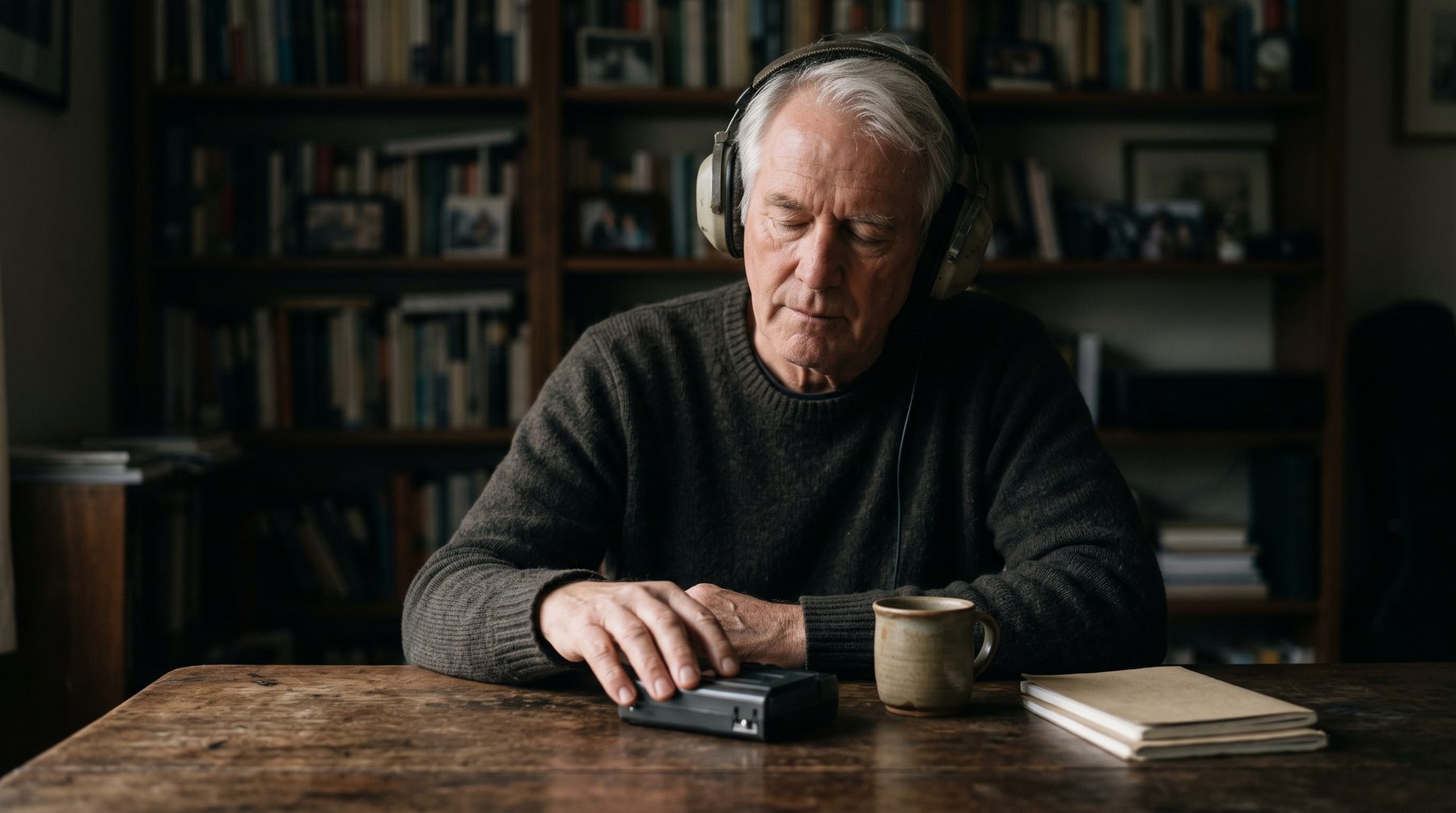
Confirming each scripted question was asked meant playing the call through, pausing and ticking a list.
Because listening takes so long, reviewers heard a small share of calls, and gaps in the rest went unseen.
Feedback to analysts rested on memory of a call, with no clip to point at.
The cost: Customer-reported: confirming every scripted question was asked took about 45 minutes of listening per call.
The turning point was seeing a single prompt return every question asked on a call, in order, next to the transcript. A reviewer no longer had to listen for the answer. They read a list, compared it to the script and opened the call only where a question was missing.
What the firm had to be convinced of first was that the list could be trusted enough to replace listening. Checking a few calls against the audio, and keeping the transcript and clip one click away, settled that. Coaching then moved from description to evidence.
The flow moves from uploaded calls to a checked list and a coaching clip.
Calls are uploaded continuously by the team and sorted into the right folders as they arrive.
Each call becomes a searchable transcript in minutes, with speakers labelled and timestamps.
A prompt and custom fields list every question asked, so reviewers compare the list to the script.
Reviewers open the exact moment, export a clip for the analyst and send results on as CSV or DOCX files.
Honest friction: Fields and automations took some guided setup, and the prompt needed adjusting before reviewers trusted it. The check is a comparison to a script, so it is only as good as the script it is compared with.
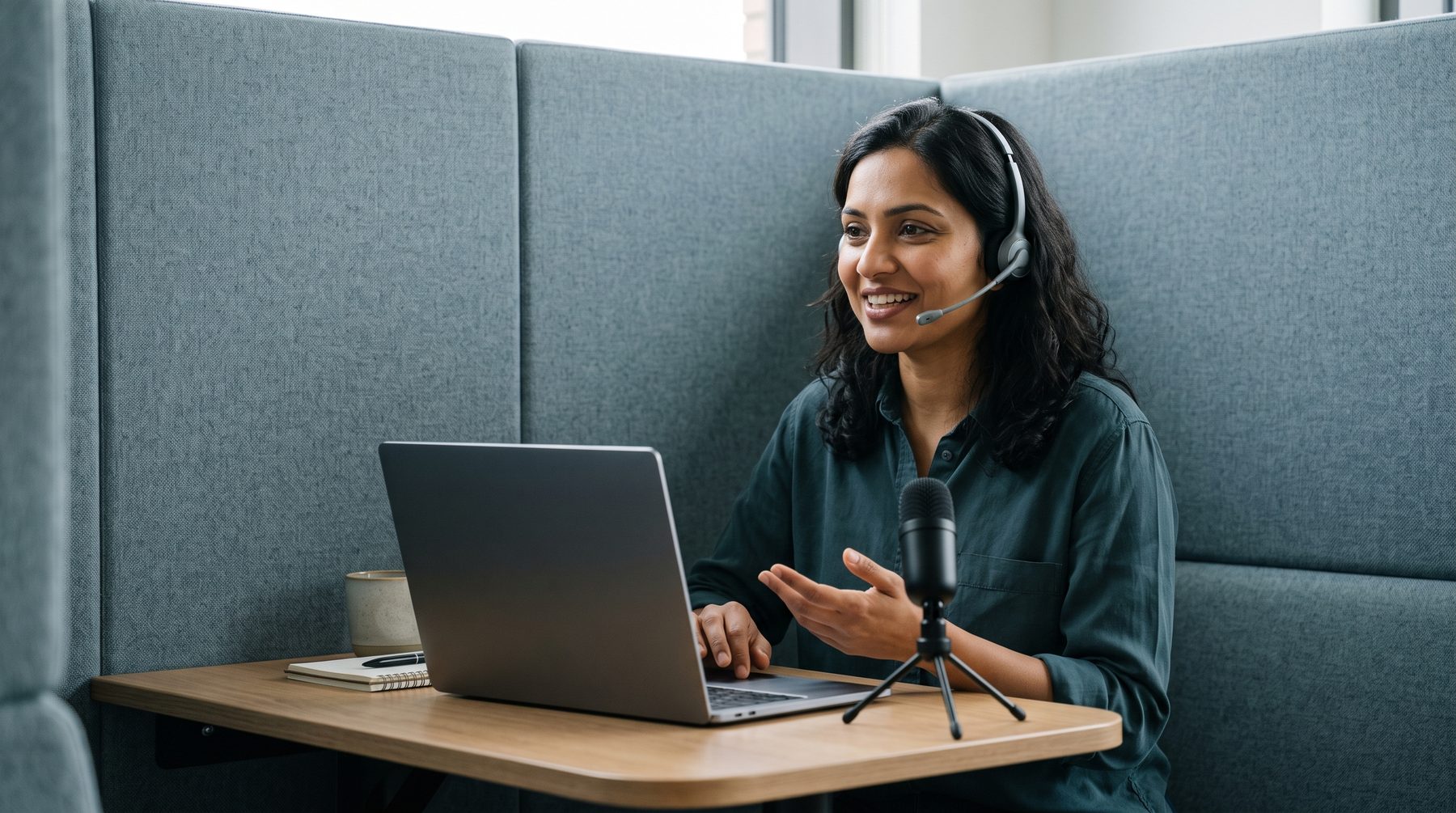
The firm has transcribed more than thirty-three thousand calls over about three years, and more than two thousand in the last quarter alone.
| Area | Before | After | Source |
|---|---|---|---|
| Confirming every scripted question was asked | About 45 minutes of listening per call | About 6 minutes to list every question asked | Customer-reported on a call with us |
The usage numbers on this page are measured from Speak records. This block is a separate estimate of the manual effort the same workload would take. It uses published time benchmarks at the low end of their ranges and official wage statistics at the 25th percentile. Most teams already have transcripts, so Speak’s value here is the analysis layer.
Counts only the analysis, grading and notes effort. The conservative baseline.
Up to about 13,000 hours and US$590,000 at the high end of the published ranges.
Baseline (a) plus manual transcription. The upper bound.
Up to about 67,000 hours and US$2,000,000 at the high end of the published ranges.
Which baseline we lead with: The customer reported listening back to each call to confirm every scripted question was asked (about 45 minutes per call). Listening back is the review itself, not transcription, and our notes do not show hand transcription, so the conservative baseline (a) leads. Baseline (b) is shown as the upper bound.
| Task | Manual time (published range) | With Speak (our assumption) |
|---|---|---|
| Listening back to confirm each scripted question was asked | 1 to 2 hours per hour of calls Survey Results (scoring time vs AHT) |
0.25 hours per hour of calls Our assumption: 0.25 hours per hour of calls to read the list of questions asked and open a clip. |
| Manual transcription (baseline b only) | 4 to 7 hours per hour of calls Realities Toolkit #08: Transcribing your own qualitative data |
0.25 hours per hour of calls Our assumption: 0.25 hours to check an AI transcript. |
Workload (measured): 7,900 hours of calls. Live recordings in the account, excluding zero-duration rows and capped at 12 hours each, pulled 2026-10-11.
Hourly cost: US$24.20 (25th percentile) to US$30.24 (median) for Paralegals and legal assistants; transcription is costed at US$16.42 to US$19.43. Both are multiplied by 1.43 to include benefits and employer costs. US wages are used as a neutral reference.
Equivalent manual effort at the low end of the published range; the customer-reported check is longer per call than the benchmark. Not every call would have been reviewed in full.
As of October 2026. This estimate is not customer-reported, is not audited, and does not include software costs.
Paraphrased from our own conversations with the team. Not quotes.
When reviewers can read a list of questions asked instead of listening, reviewing every call becomes a realistic goal rather than a sample.
Paraphrased from our calls with the team
Coaching lands better with an exact clip than with a description of what an analyst probably said.
Paraphrased from our calls with the team
Trust in a prompt comes from checking it against the audio a few times, not from a promise of accuracy.
Paraphrased from our calls with the team



Customer name withheld at their request. Figures are from Speak usage records, as of October 2026.
Talk to us about listing the questions asked on every call and coaching from the exact clip.