33,000+
Calls transcribed
~7,900
Hours of calls
How a Legal Research Firm Reviews Every Call With AI
Legal · Call scoring & coaching
Read the case study →

An insurance brokerage with no sales manager moved call grading out of a general AI chat, now records client calls, and scores each one automatically, including how it was delivered, so owners can coach without listening to every call.
The brokerage had built its own short scorecard and was grading call transcripts by pasting them into a general AI chat. Supervisors still listened to the same calls, and there was no budget for a sales manager.
The team moved to Speak. Calls are recorded or uploaded, transcribed, and scored through fields and automations, with a score that reflects delivery as well as the words spoken.
In the first two months the team recorded close to a hundred calls and ran hundreds of automation runs. The scorecard now runs the same way on every call.

Calls were graded by pasting transcripts into a general chat while supervisors listened to the same calls again.
Each call is recorded, transcribed and scored by a repeatable automation that also reads delivery.
The owners get a sales-management function from the record, with no extra hire.
The brokerage cared about how calls sounded, but its tools could only see what was said.
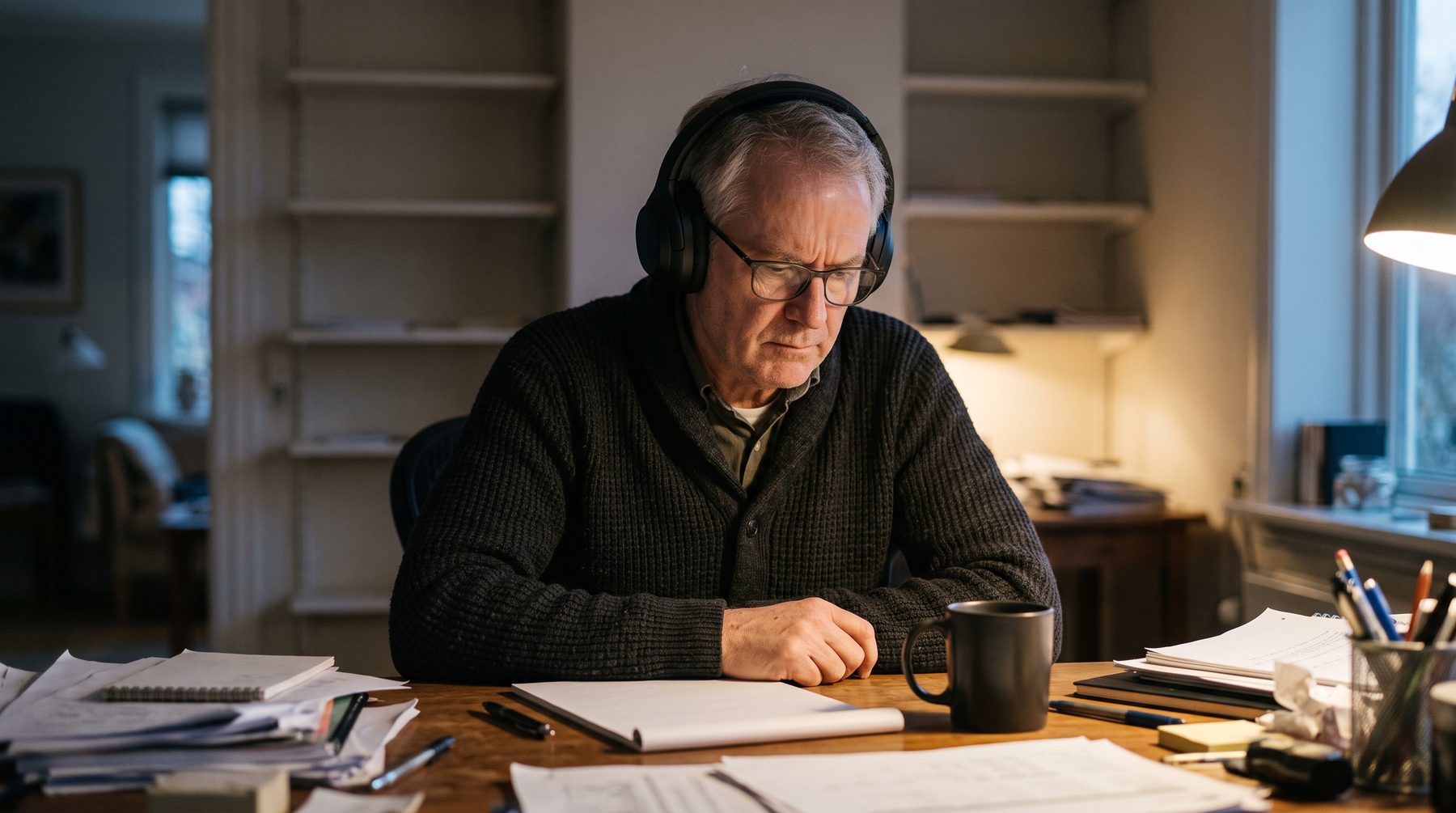
A transcript cannot tell a warm greeting from a flat one. Two calls with identical wording could land very differently with a client and still look the same on paper.
Each transcript was pasted into a general chat by hand. Results shifted with the wording of the request, so scores were hard to compare week to week.
Supervisors listened to the same calls the chat had already graded, so the review effort was doubled.
The cost: The old way cost supervisor listening time, and the owners still had no steady view of how calls were delivered.
The turning point came when the team ran two calls with the same script, one delivered warmly and one delivered flatly. The old method scored them the same. The new score separated them.
Before that, the owners needed to see the score line up with their own judgment. They compared Speak's scores with their own sense of which calls had gone well, and kept adjusting until the pattern fit. The question was never whether a machine could grade a call. It was whether the grade would match the way the people who know their producers would grade it.
Calls come in, get scored the same way every time, and sit in a folder the owners can ask questions of.
Calls are uploaded to the web app or collected through recorder links, so capture does not depend on one phone system.
Each call is transcribed with speakers labelled so the producer and the client are kept apart.
A large set of fields and a dozen automations apply the scorecard to every call, including delivery as well as wording.
Owners review scores and flagged calls, then use chat across a folder to look for patterns before a coaching conversation.
Honest friction: Fields and automations took guided sessions to get right, and the scorecard is still being tuned. The account is young and one person does the uploading, so the team has not yet spread the habit across everyone. Early numbers show a working routine, not a finished programme.

In about two months the brokerage recorded close to a hundred calls, roughly a third of an hour of audio each on average, and has run hundreds of automation runs on them.
The usage numbers on this page are measured from Speak records. This block is a separate estimate of the manual effort the same workload would take. It uses published time benchmarks at the low end of their ranges and official wage statistics at the 25th percentile. Most teams already have transcripts, so Speak’s value here is the analysis layer.
Counts only the analysis, grading and notes effort. The conservative baseline.
Up to about 45 hours and US$2,100 at the high end of the published ranges.
Baseline (a) plus manual transcription. The upper bound.
Up to about 240 hours and US$7,700 at the high end of the published ranges.
Which baseline we lead with: The team was already pasting call transcripts into a general AI chat, so transcripts existed and the conservative baseline (a) leads.
| Task | Manual time (published range) | With Speak (our assumption) |
|---|---|---|
| Listening to and scoring each call | 1 to 2 hours per hour of calls Survey Results (scoring time vs AHT) |
0.5 hours per hour of calls Our assumption: 0.5 hours per hour of calls to check and correct an AI score. |
| Manual transcription (baseline b only) | 4 to 7 hours per hour of calls Realities Toolkit #08: Transcribing your own qualitative data |
0.25 hours per hour of calls Our assumption: 0.25 hours to check an AI transcript. |
Workload (measured): 30 hours of calls. Live, non-deleted recordings for the account, with a 12-hour cap per recording and zero-length rows ignored, pulled 2026-10-11.
Hourly cost: US$26.90 (25th percentile) to US$33.41 (median) for First-line supervisors of office and administrative support workers; transcription is costed at US$16.42 to US$19.43. Both are multiplied by 1.43 to include benefits and employer costs. US wages are used as a neutral reference.
Young account with about two months of data. Equivalent manual effort, not a measured saving, and no accuracy claim.
As of October 2026. This estimate is not customer-reported, is not audited, and does not include software costs.
Paraphrased from our own conversations with the team. Not quotes.
Tone and warmth change how a client feels about a call, and a score that only reads words will miss both.
Paraphrased from our calls with the team
A score earns trust when owners can check it against their own judgment of the calls they already know.
Paraphrased from our calls with the team
Small brokerages can run a sales-management routine from a repeatable score instead of waiting until they can afford a manager.
Paraphrased from our calls with the team



Customer name withheld at their request. Figures are from Speak usage records, as of October 2026.
Talk to us about scoring client calls on delivery as well as wording.