
Updates

What's New In Speak - April 2024
Interested in What's New In Speak February 2024? Check out this post for all the new updates available for you in Speak today!


Are you curious about data structures? This article has compiled a list of unstructured data examples and other helpful information. So, stick around to the very end to better understand unstructured data.
Today, big chunks of data are pretty popular, and almost every sector of your company generates some form of data. Even though most companies adore structured data, unstructured data remains less understood. And that's a challenge to any company. More importantly, the various unstructured data examples all significantly impact your business making decisions. With that in mind, here's a list of unstructured data examples.
Emails rank up as the most popular form of unstructured data examples. That's because we use them every day for personal and business purposes. Granted, emails have an internal structure; for instance, you can easily arrange them in size, date, and time. However, that's not enough information to rank this data type as structured.
Typically, emails in most organizations are disorganized and take time to sift through. On top of that, finding the correct emails could take ages without the proper tools to help you find what you are looking for. Organizing emails using unstructured data analysis tools could help speed up the process.
When it comes to text files, the list goes on and on. From PDF files and spreadsheets to word documents- you name it! There are a lot of text files that fall into this category and can be defined as unstructured data examples.
By now, I'm sure you can already sense a pattern. As the name suggests, most unstructured data examples do not have any form of structure. And that makes it quite challenging to analyze and use when it comes to data-driven decision-making in your company. XML, graphic files, and Word documents contain valuable information for your company's future.
Another example of unstructured data is websites. Information from websites is broadly considered a source of raw and unstructured data that can work in favor of your business once correctly harnessed. Additionally, sites such as YouTube and photo-sharing pages like Instagram and Flickr are unstructured databases.
Even though social media can also be ranked under websites' unstructured data examples, it deserves special attention. Undoubtedly, the data generated from social media sites such as Facebook, Instagram, TikTok, and Twitter is massive and dramatically impacts your business.
More importantly, social media is a valuable real-time data source that companies worldwide utilize. More specifically, when a customer mentions your company in their post, that immediately turns into unstructured data. These posts are rich sources of insightful data that can be used for further analysis.
Digital images, audio files such as MP3s, and video represent a significant part of unstructured non-textual data. These data can provide rich, valuable information in any business sector.
You might wonder why images are ranked among unstructured data types yet can be placed in databases. The simple answer is that most businesses care a lot about the meaning of the picture rather than its underlying database. That's why images and all media are essential unstructured data examples.
Digital images come in PNG and JPG. But this image data doesn't tell us anything about the information on the image. It simply tells us that this is an image format and its size. It needs to be analyzed using unstructured data analysis tools to understand the image file better.
There are different forms of customer-generated content, for instance, emails, online reviews, and comments or emails to the support team. These are all great unstructured data examples. They also collectively speak volumes about your customer service and satisfaction.
When used correctly and analyzed, you can obtain insightful data that could help improve your customer's relationship from customer-generated content. Feedback and questions by customers are also unstructured data.
Mobile data is another source of unstructured data. This section contains several types of data, including location and messages. Today, almost everyone has access to a mobile phone. That means mobile data is an excellent source of information since this sector continues to grow.
Texting is now a crucial sector since it connects businesses and customers. At the same time, this sector collects unstructured data information is useful when it comes to making data-driven decisions.
Other great unstructured data examples are newspapers, books, and magazines. In fact, even blog posts are examples of unstructured data. These types of unstructured data sources form a considerable percentage of free information available to the public.
We all know marketing research is crucial in promoting your brand's awareness. However, market research only presents raw data that's typically in the form of unstructured data. Such enormous data forms require further analysis to make them applicable to your company.
The data collected in market research is entirely raw and unstructured. Without the proper tools by your side, this information can be worthless. Some examples of raw marketing data include surveys, focus group interviews (check out how to transcribe focus groups), and more.
As you can see, unstructured data examples are almost everywhere. We use unstructured data daily, but it sometimes is hard to derive insightful data from them at times. So, how do we analyze unstructured data examples to make informed business decisions? That's the million-dollar question.
Thankfully, software companies such as Speak Ai is at the forefront of tech innovation, offering clients analysis tools capable of handling unstructured data.

To start your transcription and analysis, you first need to create a Speak account. No worries, this is super easy to do!
Get a 7-day trial with 30 minutes of free English audio and video transcription included when you sign up for Speak.
To sign up for Speak and start using Speak Magic Prompts, visit the Speak app register page here.
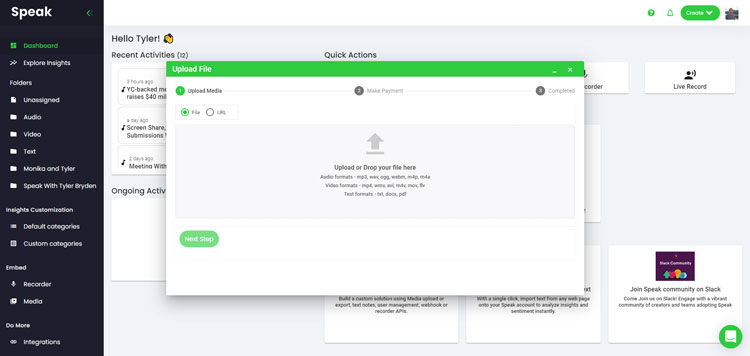
We typically recommend MP4s for video or MP3s for audio.
However, we accept a range of audio, video and text file types.
You can upload your file for transcription in several ways using Speak:
You can also upload CSVs of text files or audio and video files. You can learn more about CSV uploads and download Speak-compatible CSVs here.
With the CSVs, you can upload anything from dozens of YouTube videos to thousands of Interview Data.
You can also upload media to Speak through a publicly available URL.
As long as the file type extension is available at the end of the URL you will have no problem importing your recording for automatic transcription and analysis.
Speak is compatible with YouTube videos. All you have to do is copy the URL of the YouTube video (for example, https://www.youtube.com/watch?v=qKfcLcHeivc).
Speak will automatically find the file, calculate the length, and import the video.
If using YouTube videos, please make sure you use the full link and not the shortened YouTube snippet. Additionally, make sure you remove the channel name from the URL.
As mentioned, Speak also contains a range of integrations for Zoom, Zapier, Vimeo and more that will help you automatically transcribe your media.
This library of integrations continues to grow! Have a request? Feel encouraged to send us a message.
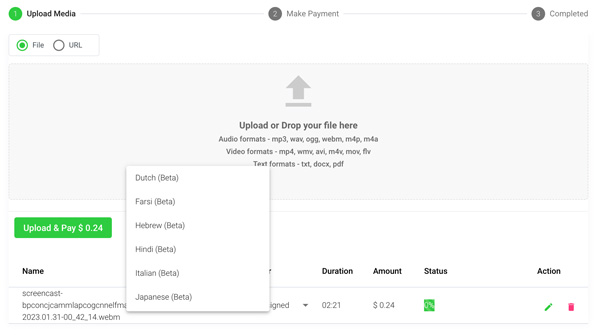
Once you have your file(s) ready and load it into Speak, it will automatically calculate the total cost (you get 30 minutes of audio and video free in the 7-day trial - take advantage of it!).
If you are uploading text data into Speak, you do not currently have to pay any cost. Only the Speak Magic Prompts analysis would create a fee which will be detailed below.
Once you go over your 30 minutes or need to use Speak Magic Prompts, you can pay by subscribing to a personalized plan using our real-time calculator.
You can also add a balance or pay for uploads and analysis without a plan using your credit card.
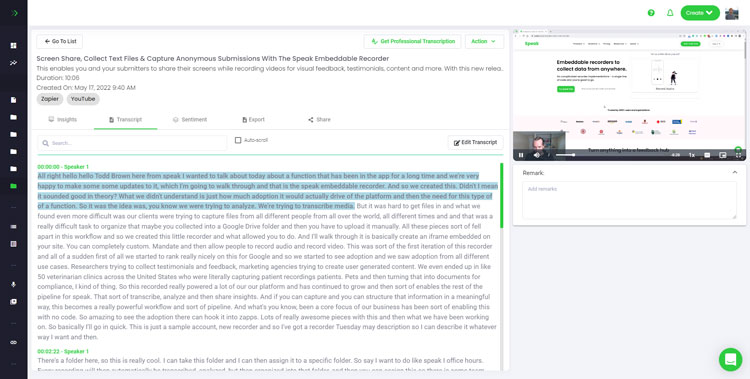
If you are uploading audio and video, our automated transcription software will prepare your transcript quickly. Once completed, you will get an email notification that your transcript is complete. That email will contain a link back to the file so you can access the interactive media player with the transcript, analysis, and export formats ready for you.
If you are importing CSVs or uploading text files Speak will generally analyze the information much more quickly.
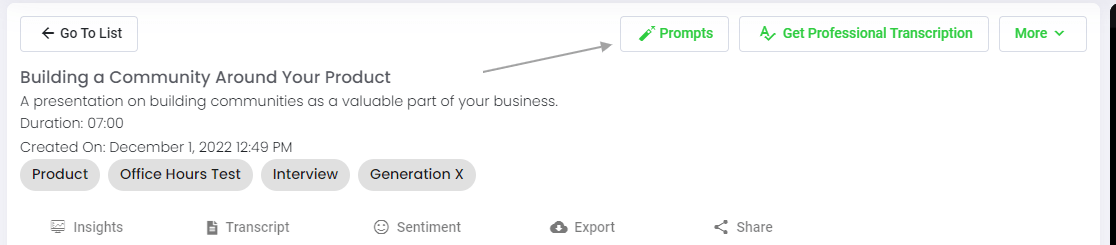
Speak is capable of analyzing both individual files and entire folders of data.
When you are viewing any individual file in Speak, all you have to do is click on the "Prompts" button.
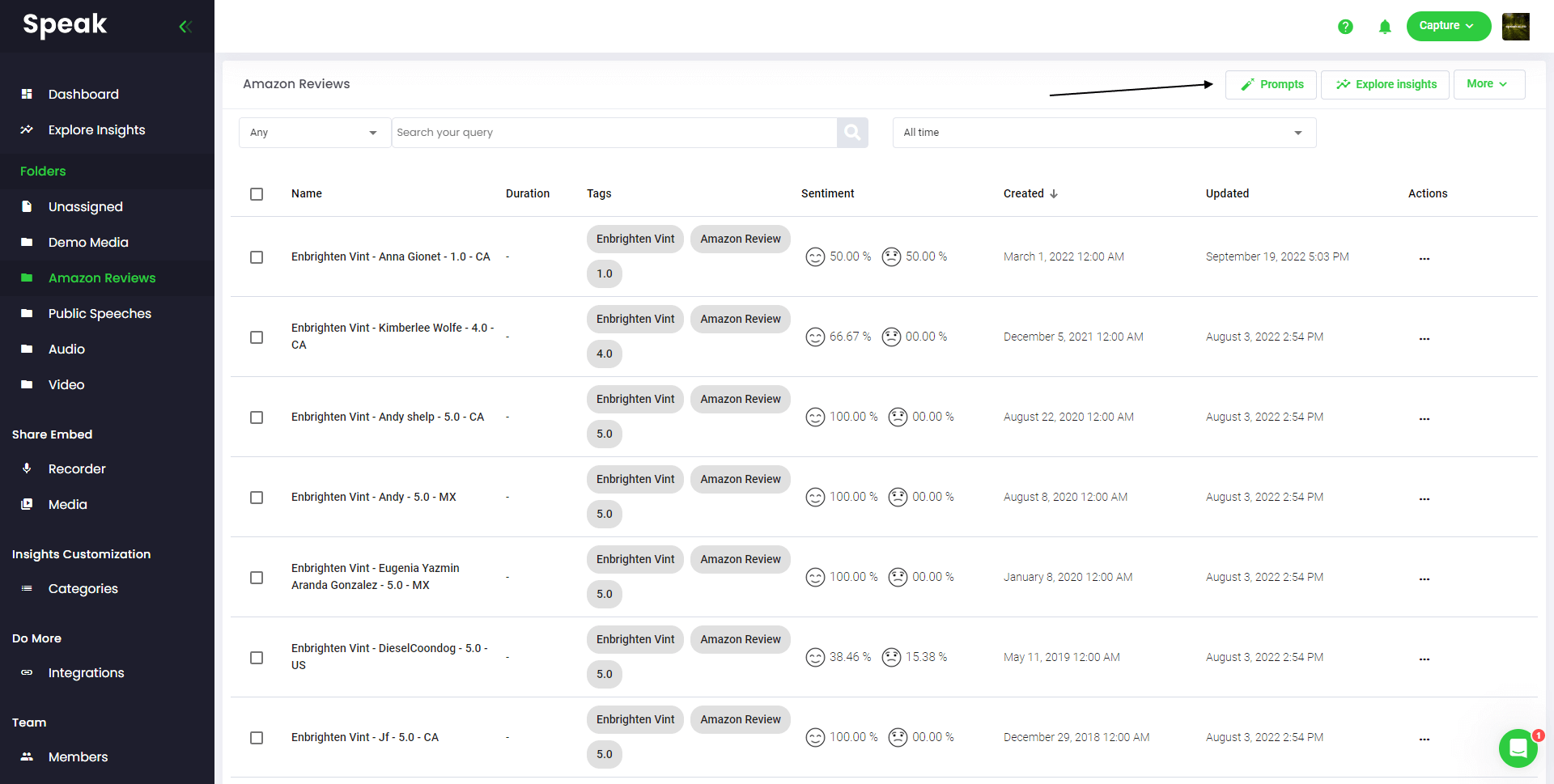
If you want to analyze many files, all you have to do is add the files you want to analyze into a folder within Speak.
You can do that by adding new files into Speak or you can organize your current files into your desired folder with the software's easy editing functionality.
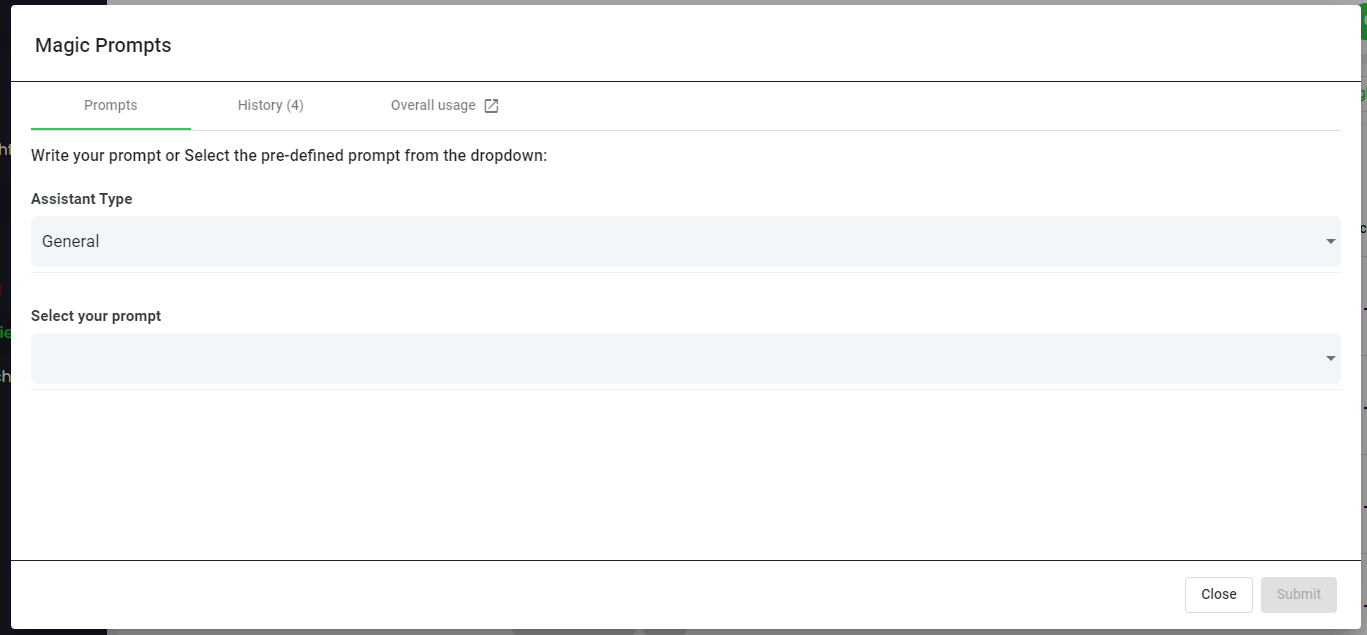
Speak Magic Prompts leverage innovation in artificial intelligence models often referred to as "generative AI".
These models have analyzed huge amounts of data from across the internet to gain an understanding of language.
With that understanding, these "large language models" are capable of performing mind-bending tasks!
With Speak Magic Prompts, you can now perform those tasks on the audio, video and text data in your Speak account.
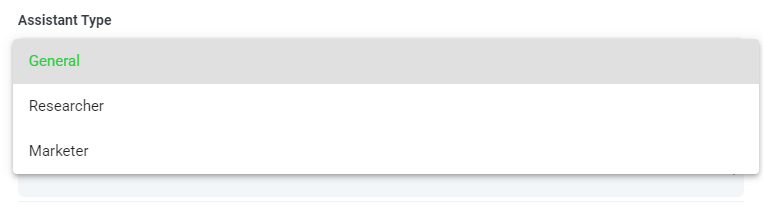
To help you get better results from Speak Magic Prompts, Speak has introduced "Assistant Type".
These assistant types pre-set and provide context to the prompt engine for more concise, meaningful outputs based on your needs.
To begin, we have included:
Choose the most relevant assistant type from the dropdown.

Here are some examples prompts that you can apply to any file right now:
A modal will pop up so you can use the suggested prompts we shared above to instantly and magically get your answers.
If you have your own prompts you want to create, select "Custom Prompt" from the dropdown and another text box will open where you can ask anything you want of your data!
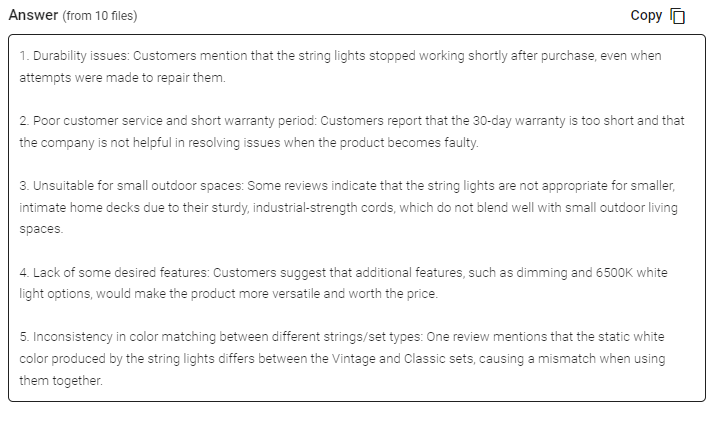
Speak will generate a concise response for you in a text box below the prompt selection dropdown.
In this example, we ask to analyze all the Interview Data in the folder at once for the top product dissatisfiers.
You can easily copy that response for your presentations, content, emails, team members and more!
Our team at Speak Ai continues to optimize the pricing for Magic Prompts and Speak as a whole.
Right now, anyone in the 7-day trial of Speak gets 100,000 characters included in their account.
If you need more characters, you can easily include Speak Magic Prompts in your plan when you create a subscription.
You can also upgrade the number of characters in your account if you already have a subscription.
Both options are available on the subscription page.
Alternatively, you can use Speak Magic Prompts by adding a balance to your account. The balance will be used as you analyze characters.
Here at Speak, we've made it incredibly easy to personalize your subscription.
Once you sign-up, just visit our custom plan builder and select the media volume, team size, and features you want to get a plan that fits your needs.
No more rigid plans. Upgrade, downgrade or cancel at any time.
When you subscribe, you will also get a free premium add-on for three months!
That means you save up to $50 USD per month and $150 USD in total.
Once you subscribe to a plan, all you have to do is send us a live chat with your selected premium add-on from the list below:
We will put the add-on live in your account free of charge!
What are you waiting for?
If you have friends, peers and followers interested in using our platform, you can earn real monthly money.
You will get paid a percentage of all sales whether the customers you refer to pay for a plan, automatically transcribe media or leverage professional transcription services.
Use this link to become an official Speak affiliate.
It would be an honour to personally jump on an introductory call with you to make sure you are set up for success.
Just use our Calendly link to find a time that works well for you. We look forward to meeting you!
Interested in What's New In Speak February 2024? Check out this post for all the new updates available for you in Speak today!
Interested in What's New In Speak February 2024? Check out this post for all the new updates available for you in Speak today!
Interested in What's New In Speak February 2024? Check out this post for all the new updates available for you in Speak today!

Thank you for continuing to be part of this journey - it means the world to us. Below is a summary of our 2023 at

Interested in The Best Executive Research Firms? Check out the dedicated article the Speak Ai team put together on The Best Executive Research Firms to learn more.
Interested in The Best Consumer Research Firms? Check out the dedicated article the Speak Ai team put together on The Best Consumer Research Firms to learn more.

Powered by Speak Ai Inc. Made in Canada with 