
How to Create Chinese (Cantonese, Traditional) Subtitles
Chinese (Cantonese, Traditional) is one of the most widely spoken languages in the world, with over 1.3 billion native speakers across countries like China, Hong Kong, Macau, Taiwan, and Singapore. This makes it one of the most important languages for businesses and researchers to understand and use.
Creating subtitles and transcripts for audio and video content in the Chinese (Cantonese, Traditional) language has many benefits, from improving accessibility and enabling content to reach new audiences, to understanding customer feedback and analyzing conversations.
What are Subtitles and How are they Different than Captions?
Subtitles are text versions of spoken dialogue in a video or audio file. They are a great way to increase the accessibility of a video, making it easier to follow the narrative and understand the content even if the audio is not clear or is inaudible.
Captions, on the other hand, include both dialogue and sound effects. Captions may also be used to add emphasis to a scene or for comedic effect.
Benefits of Transcription and Creating Subtitles in Chinese (Cantonese, Traditional)
Creating subtitles and transcripts in Chinese (Cantonese, Traditional) can be very beneficial for businesses, researchers, and marketers. Here are some of the benefits:
Reach New Audiences
By making your content accessible to those who speak Chinese (Cantonese, Traditional), you can reach new audiences and expand your presence in the global market. With subtitles, you can also make your content accessible to those who are deaf or hard of hearing.
Make Content Easier to Understand
Chinese (Cantonese, Traditional) subtitles can make videos easier to understand, as they provide the viewer with written dialogue that can be read and re-read as needed. This can be especially helpful when viewing content with unfamiliar accents or dialects, or when there is background noise that makes the audio difficult to understand.
Analyze Conversations
Creating subtitles and transcripts in Chinese (Cantonese, Traditional) can also be extremely useful for analysis. By transcribing audio and video, it’s easier to understand the conversations and gain insights into customer feedback. This can help businesses to better understand their customers and make informed decisions.
Drive Signups with Speak AI
Speak AI is a speech recognition and natural language platform with over 70,000 users. Creating subtitles and transcripts in Chinese (Cantonese, Traditional) can be a great way to drive sign-ups and get more users on the platform. With its powerful speech recognition technology, Speak AI can help researchers, marketers, and businesses to better understand their customers and gain valuable insights into their conversations.
Zaključek
Creating subtitles and transcripts in Chinese (Cantonese, Traditional) can be a great way to reach new audiences, make content easier to understand, and gain valuable insights into customer feedback. Speak AI is a powerful speech recognition and natural language platform that can help businesses and researchers to better understand their customers and drive more sign-ups.

Korak 1: Ustvarite račun Speak
To start your Chinese (Cantonese, Traditional) subtitling, you first need to ustvarite račun Speak. Brez skrbi, to je zelo enostavno!
Our team is happy to give you a 7-day trial with trial credits for Chinese (Cantonese, Traditional) audio and video subtitling included.
To sign up for Speak and start your Chinese (Cantonese, Traditional) subtitling, visit the Speak app register page tukaj.
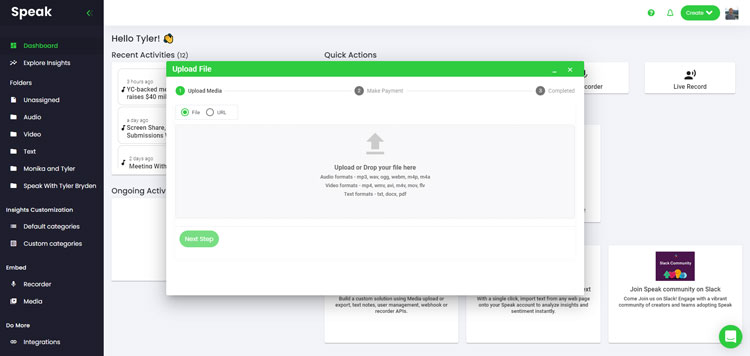
Step 2: Upload your Chinese (Cantonese, Traditional) file(s) for subtitling
Za videoposnetke običajno priporočamo datoteke MP4, za zvok pa datoteke MP3.
However, we accept a range of audio and video file types. Once you upload your file all you have to do is select “Chinese (Cantonese, Traditional)” from the language dropdown menu to automatically subtitle in Chinese (Cantonese, Traditional).
You can upload your Chinese (Cantonese, Traditional) file for subtitling in several ways using Speak:
Sprejete vrste zvočnih datotek v kitajščini (kantonski, tradicionalni)
- Kitajščina (kantonska, tradicionalna) MP3
- Kitajščina (kantonščina, tradicionalna) M4A
- Kitajščina (kantonščina, tradicionalna) WAV
- Kitajščina (kantonska, tradicionalna) OGG
- Kitajščina (kantonščina, tradicionalna) WEBM
- Kitajščina (kantonska, tradicionalna) M4P
Sprejete vrste kitajskih (kantonskih, tradicionalnih) video datotek
- Kitajščina (kantonska, tradicionalna) MP4
- Kitajščina (kantonščina, tradicionalna) M4V
- Kitajščina (kantonska, tradicionalna) WMV
- Kitajščina (kantonščina, tradicionalna) AVI
- Kitajščina (kantonščina, tradicionalna) MOV
- Kitajščina (kantonska, tradicionalna) FLV
Javno dostopni kitajski (kantonski, tradicionalni) naslovi URL
Medije lahko v program Speak naložite tudi prek javno dostopnega URL-ja.
As long as the file type extension is available at the end of the URL you will have no problem importing your recording for automatic Chinese (Cantonese, Traditional) subtitling and analysis.
Kitajski (kantonski, tradicionalni) naslovi URL v YouTubu
Govorjenje je združljivo z videoposnetki YouTube. Vse, kar morate storiti, je, da kopirate naslov URL videoposnetka YouTube (na primer, https://www.youtube.com/watch?v=qKfcLcHeivc).
Speak bo samodejno poiskal datoteko, izračunal dolžino in uvozil videoposnetek.
Poskrbite, da uporabite celotno povezavo in ne skrajšanega odlomka iz YouTuba. Poleg tega iz naslova URL odstranite ime kanala.
Integracije govora
Kot smo že omenili, Speak vsebuje tudi vrsto integracij za Povečanje, Zapier, Vimeo in drugi, ki vam bodo pomagali samodejno podnaslavljati medije.
Knjižnica integracij se še naprej širi! Imate zahtevo? Pošljite nam sporočilo.
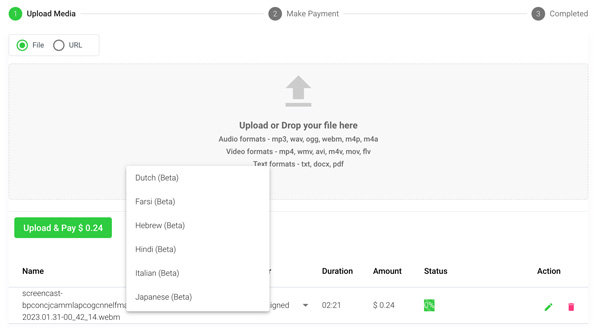
Korak 3: Izračunajte in samodejno plačajte celoten znesek
Once you have your Chinese (Cantonese, Traditional) audio or video file ready and load it into Speak, it will automatically calculate the total cost (trial credits are included in the trial – take advantage of it!).
Plačate lahko tako, da se naročite na prilagojen načrt z našim kalkulatorjem v realnem času z vključenimi minutami.
Prav tako lahko dodajanje ravnotežja ali plačati za prenos brez načrta z uporabo kreditna kartica.
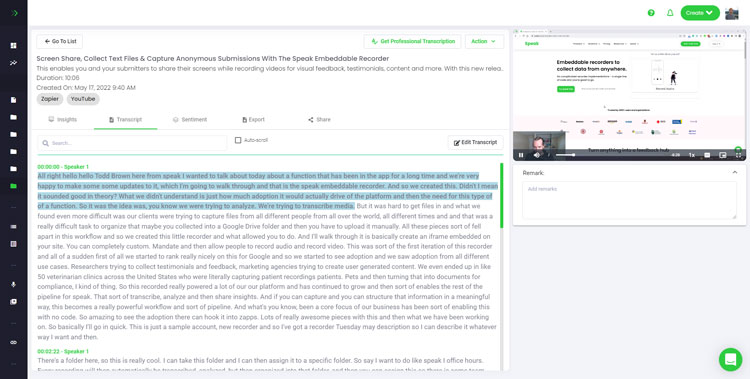
Step 4: Wait for Speak to subtitle your Chinese (Cantonese, Traditional) audio or Chinese (Cantonese, Traditional) video
Our automated subtitling software will prepare your Chinese (Cantonese, Traditional) subtitles in as little as a few minutes. Generally, Speak takes about half the audio or video length to produce the subtitles and insights.
Once completed, you will get an email notification that your Chinese (Cantonese, Traditional) subtitles is complete. That email will contain a link back to the file so you can access the interactive media player with the Chinese (Cantonese, Traditional) subtitles, analysis, and export formats ready for you.
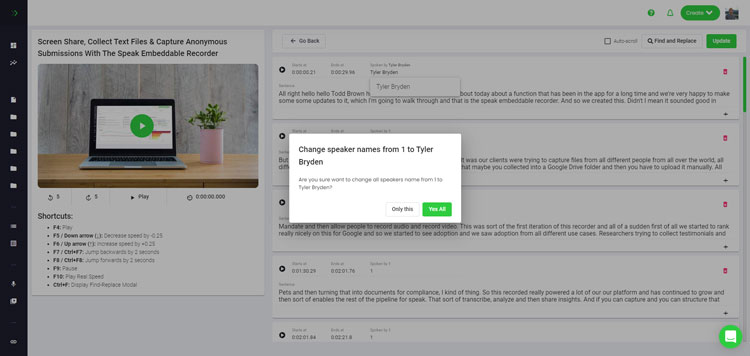
Step 5: View and edit your automated Chinese (Cantonese, Traditional) subtitles
Želite sami urejati podnapise? Vse v redu! Ko prejmete avtomatizirane podnapise, jih lahko kadar koli uredite.
Easily update speaker names, find and replace, and get your automatic Chinese (Cantonese, Traditional) subtitles up to full accuracy with our intuitive subtitles editing system.
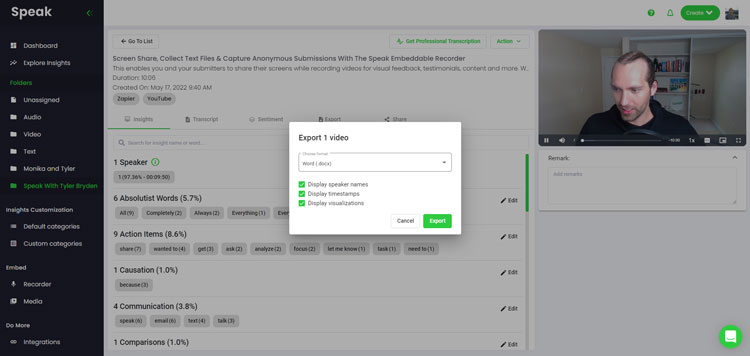
Step 6: Export your Chinese (Cantonese, Traditional) subtitles and share interactive media players
With Speak, you can easily export Chinese (Cantonese, Traditional) subtitles to many formats.
Below is a list of options for exporting your Chinese (Cantonese, Traditional) subtitles in Speak:
- Export Chinese (Cantonese, Traditional) subtitles to SRTs
- Export Chinese (Cantonese, Traditional) subtitles to VTTs
Učinkovitejši način deljenja podnapisov je prek medijska knjižnica, ki jo je mogoče deliti. to vključuje medijsko datoteko, vpoglede umetne inteligence in interaktivne podnapise.
S programom Speak lahko naredite še veliko več, da obogatite vrednost svojih medijev in podnapisov.
Nikoli ne oklevajte in nam pošljite sporočilo v klepetu v živo - vedno smo vam na voljo za pomoč!
We talked about Chinese (Cantonese, Traditional) subtitling here, but you may be interested in how to subtitle in other languages instantly and easily with Speak’s intuitive subtitling and natural language processing software.
Spodaj smo delili vire o vseh jezikih, za katere vam Speak lahko pomaga pri podnapisih!
Join 300,000+ users finding radical efficiencies with their audio, video and text data to drive value.
How Much Does It Cost To Subtitle Chinese (Cantonese, Traditional)?
Speak offers highly competitive pricing for Chinese (Cantonese, Traditional) subtitling compared to other subtitling solutions. For a starting user, Speak offers automated Chinese (Cantonese, Traditional) subtitling from 2 credits per hour of audio on pay as you go (1 credit = US$1). Pro includes 25 credits per user per month.
Cene določamo tudi glede na količino medijev, velikim strankam pa lahko ponudimo še večje popuste.
So, if you have over 100 hours of Chinese (Cantonese, Traditional) subtitling per month please contact us through live chat and we will set you up with a customized price per minute to make Chinese (Cantonese, Traditional) subtitling even more affordable!
You can learn more about how to subtitle Chinese (Cantonese, Traditional) with Speak and the relevant pricing on the spletna stran s cenami in stran s cenami v aplikaciji.
What Can You Subtitle In Chinese (Cantonese, Traditional)?
- Subtitle Chinese (Cantonese, Traditional) interviews
- Subtitle Chinese (Cantonese, Traditional) videos
- Subtitle Chinese (Cantonese, Traditional) audio
- Subtitle Chinese (Cantonese, Traditional) earnings calls
- Subtitle Chinese (Cantonese, Traditional) focus groups
- Subtitle Chinese (Cantonese, Traditional) meetings
- Subtitle Chinese (Cantonese, Traditional) phone calls
- Subtitle Chinese (Cantonese, Traditional) YouTube videos
- Subtitle Chinese (Cantonese, Traditional) Vimeo videos
- Subtitle Chinese (Cantonese, Traditional) Zoom recordings
- Subtitle Chinese (Cantonese, Traditional) Google Meet recordings
- Podnaslavljanje posnetkov v storitvi Microsoft Teams
- Subtitle Chinese (Cantonese, Traditional) podcasts
In še veliko več!
Katere druge jezike lahko govorijo podnapisi?
Speak ima že uporabnike iz več kot 90 držav in nenehno prejemamo zahteve za podnaslavljanje in analizo v različnih jezikih.
Zato v program Speak nenehno dodajamo nove jezike! Tukaj je le nekaj jezikov, ki jih ponuja Speak:
- Kako ustvariti podnapise v afrikanščini
- Kako ustvariti arabske (egiptovske) podnapise
- Kako ustvariti arabske (iraške) podnapise
- Kako ustvariti arabske (izraelske) podnapise
- Kako ustvariti arabske (jordanske) podnapise
- Kako ustvariti arabske (kuvajtske) podnapise
- Kako ustvariti arabske (libanonske) podnapise
- Kako ustvariti arabske (omanske) podnapise
- Kako ustvariti arabske (palestinske oblasti) podnapise
- Kako ustvariti arabske (katarske) podnapise
- Kako ustvariti arabske (Saudova Arabija) podnapise
- Kako ustvariti arabske (Sirska arabska republika) podnapise
- Kako ustvariti arabske podnapise (Združeni arabski emirati)
- Kako ustvariti sodobne standardne arabske podnapise (Bahrajn)
- Kako ustvariti armenske podnapise
- Kako ustvariti bolgarske podnapise
- Kako ustvariti katalonske podnapise
- Kako ustvariti kitajske (kantonske, tradicionalne) podnapise
- Kako ustvariti kitajske (poenostavljene) podnapise
- Kako ustvariti kitajske (tradicionalne) podnapise
- Kako ustvariti hrvaške podnapise
- Kako ustvariti češke podnapise
- Kako ustvariti danske podnapise
- Kako ustvariti nizozemske podnapise
- Kako ustvariti angleške podnapise
- Kako ustvariti angleške (avstralske) podnapise
- Kako ustvariti angleške (indijske) podnapise
- Kako ustvariti angleške (irske) podnapise
- Kako ustvariti angleške (novozelandske) podnapise
- Kako ustvariti angleške (škotske) podnapise
- Kako ustvariti angleške (južnoafriške) podnapise
- Kako ustvariti angleške (Združeno kraljestvo) podnapise
- Kako ustvariti angleške (Združene države) podnapise
- Kako ustvariti estonske podnapise
- Kako ustvariti podnapise v perzijski jeziku
- Kako ustvariti finske podnapise
- Kako ustvariti francoske podnapise
- Kako ustvariti francoske (kanadske) podnapise
- Kako ustvariti nemške podnapise
- Kako ustvariti nemške (švicarske) podnapise
- Kako ustvariti grške podnapise
- Kako ustvariti podnapise v gudžaratščini
- Kako ustvariti hebrejske podnapise
- Kako ustvariti podnapise v hindijščini
- Kako ustvariti madžarske podnapise
- Kako ustvariti islandske podnapise
- Kako ustvariti indonezijske podnapise
- Kako ustvariti irske podnapise
- Kako ustvariti italijanske podnapise
- Kako ustvariti japonske podnapise
- Kako ustvariti podnapise v kannadščini
- Kako ustvariti korejske podnapise
- Kako ustvariti latvijske podnapise
- Kako ustvariti litovske podnapise
- Kako ustvariti malajske podnapise
- Kako ustvariti podnapise v malajalamščini
- Kako ustvariti norveške podnapise
- Kako ustvariti perzijske podnapise
- Kako ustvariti poljske podnapise
- Kako ustvariti portugalske podnapise
- Kako ustvariti portugalske (brazilske) podnapise
- Kako ustvariti portugalske (portugalske) podnapise
- Kako ustvariti romunske podnapise
- Kako ustvariti ruske podnapise
- Kako ustvariti slovaške podnapise
- Kako ustvariti slovenščino podnapisov
- Kako ustvariti španske podnapise
- Kako ustvariti španske (mehiške) podnapise
- Kako ustvariti švedske podnapise
- Kako ustvariti tamilske podnapise
- Kako ustvariti teluške podnapise
- Kako ustvariti tajske podnapise
- Kako ustvariti turške podnapise
- Kako ustvariti ukrajinske podnapise
- Kako ustvariti vietnamske podnapise
Zdaj jih je dodanih še veliko več!
Ogledate si lahko celoten seznam jezikov, ki jih podpira Speak prek programske opreme in vmesnikov API.
Raziščite Speak AI
Speak AI je platforma za glasovno tehnologijo in AI raziskave. Prepis govora v več kot 100 jezikih, NLP analitika, analiza sentimenta, AI agenti in svetovanje za podjetja.
 English
 Español
 Français
 Italiano
 العربية
 Português do Brasil
 Nederlands
 Deutsch
 עִבְרִית
 Русский
 日本語
 Polski
 Čeština
 Українська
 Slovenščina
 Svenska
 Ελληνικά
 Norsk bokmål
 简体中文
 Türkçe
 Català
 Magyar
 한국어
 Slovenčina
 Suomi