
How to Create Chinese (Cantonese, Traditional) Subtitles
Chinese (Cantonese, Traditional) is one of the most widely spoken languages in the world, with over 1.3 billion native speakers across countries like China, Hong Kong, Macau, Taiwan, and Singapore. This makes it one of the most important languages for businesses and researchers to understand and use.
Creating subtitles and transcripts for audio and video content in the Chinese (Cantonese, Traditional) language has many benefits, from improving accessibility and enabling content to reach new audiences, to understanding customer feedback and analyzing conversations.
What are Subtitles and How are they Different than Captions?
Subtitles are text versions of spoken dialogue in a video or audio file. They are a great way to increase the accessibility of a video, making it easier to follow the narrative and understand the content even if the audio is not clear or is inaudible.
Captions, on the other hand, include both dialogue and sound effects. Captions may also be used to add emphasis to a scene or for comedic effect.
Benefits of Transcription and Creating Subtitles in Chinese (Cantonese, Traditional)
Creating subtitles and transcripts in Chinese (Cantonese, Traditional) can be very beneficial for businesses, researchers, and marketers. Here are some of the benefits:
Reach New Audiences
By making your content accessible to those who speak Chinese (Cantonese, Traditional), you can reach new audiences and expand your presence in the global market. With subtitles, you can also make your content accessible to those who are deaf or hard of hearing.
Kontynuuj czytanie całego przewodnika (kliknij, aby rozwinąć)
Make Content Easier to Understand
Chinese (Cantonese, Traditional) subtitles can make videos easier to understand, as they provide the viewer with written dialogue that can be read and re-read as needed. This can be especially helpful when viewing content with unfamiliar accents or dialects, or when there is background noise that makes the audio difficult to understand.
Analyze Conversations
Creating subtitles and transcripts in Chinese (Cantonese, Traditional) can also be extremely useful for analysis. By transcribing audio and video, it’s easier to understand the conversations and gain insights into customer feedback. This can help businesses to better understand their customers and make informed decisions.
Drive Signups with Speak AI
Speak AI is a speech recognition and natural language platform with over 70,000 users. Creating subtitles and transcripts in Chinese (Cantonese, Traditional) can be a great way to drive sign-ups and get more users on the platform. With its powerful speech recognition technology, Speak AI can help researchers, marketers, and businesses to better understand their customers and gain valuable insights into their conversations.
Wnioski
Creating subtitles and transcripts in Chinese (Cantonese, Traditional) can be a great way to reach new audiences, make content easier to understand, and gain valuable insights into customer feedback. Speak AI is a powerful speech recognition and natural language platform that can help businesses and researchers to better understand their customers and drive more sign-ups.
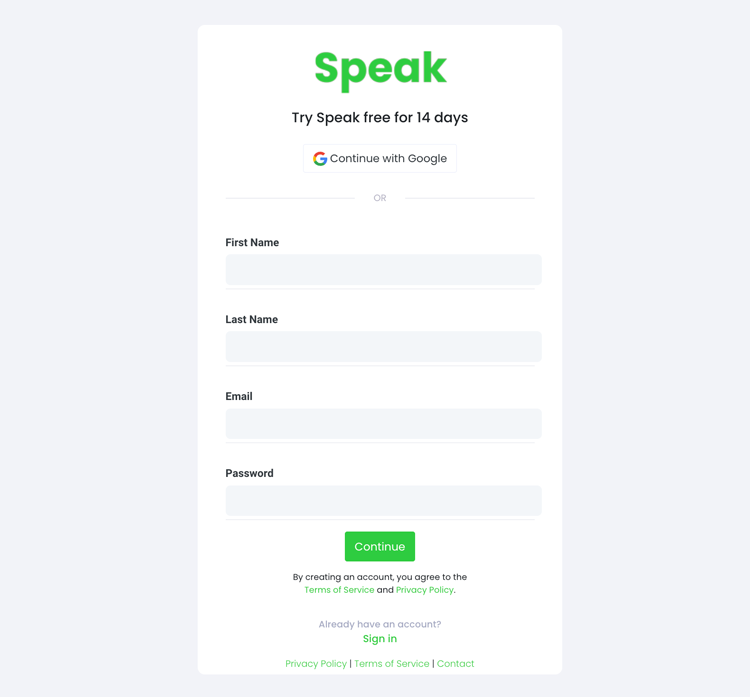
Krok 1: Utwórz konto Speak
To start your Chinese (Cantonese, Traditional) subtitling, you first need to Utwórz konto Speak. Bez obaw, jest to bardzo łatwe do zrobienia!
Our team is happy to give you a 7-day trial with 30 minutes of free Chinese (Cantonese, Traditional) audio and video subtitling included.
To sign up for Speak and start your Chinese (Cantonese, Traditional) subtitling, visit the Speak app register page tutaj.
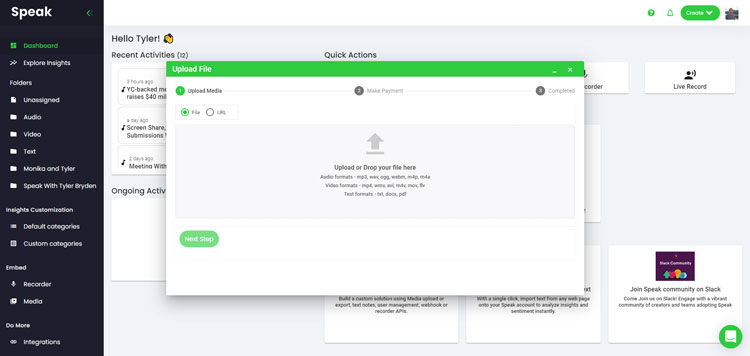
Step 2: Upload your Chinese (Cantonese, Traditional) file(s) for subtitling
Zazwyczaj zalecamy pliki MP4 dla wideo lub MP3 dla audio.
However, we accept a range of audio and video file types. Once you upload your file all you have to do is select “Chinese (Cantonese, Traditional)” from the language dropdown menu to automatically subtitle in Chinese (Cantonese, Traditional).
You can upload your Chinese (Cantonese, Traditional) file for subtitling in several ways using Speak:
Akceptowane typy plików audio w języku chińskim (kantoński, tradycyjny)
- Chiński (kantoński, tradycyjny) MP3
- Chiński (kantoński, tradycyjny) M4A
- Chiński (kantoński, tradycyjny) WAV
- Chiński (kantoński, tradycyjny) OGG
- Chiński (kantoński, tradycyjny) WEBM
- Chiński (kantoński, tradycyjny) M4P
Akceptowane typy plików wideo w języku chińskim (kantońskim, tradycyjnym)
- Chiński (kantoński, tradycyjny) MP4
- Chiński (kantoński, tradycyjny) M4V
- Chiński (kantoński, tradycyjny) WMV
- Chiński (kantoński, tradycyjny) AVI
- Chiński (kantoński, tradycyjny) MOV
- Chiński (kantoński, tradycyjny) FLV
Publicznie dostępne chińskie (kantoński, tradycyjny) adresy URL
Możesz także przesyłać multimedia do Speak za pośrednictwem publicznie dostępnego adresu URL.
As long as the file type extension is available at the end of the URL you will have no problem importing your recording for automatic Chinese (Cantonese, Traditional) subtitling and analysis.
Chińskie (kantoński, tradycyjny) adresy URL YouTube
Speak jest kompatybilny z filmami z YouTube. Wszystko, co musisz zrobić, to skopiować adres URL filmu z YouTube (na przykład, https://www.youtube.com/watch?v=qKfcLcHeivc).
Speak automatycznie znajdzie plik, obliczy jego długość i zaimportuje wideo.
Upewnij się, że używasz pełnego linku, a nie skróconego fragmentu YouTube. Ponadto należy usunąć nazwę kanału z adresu URL.
Integracje Speak
Jak wspomniano, Speak zawiera również szereg integracji dla Zoom, Zapier, Vimeo i inne, które pomogą Ci automatycznie utworzyć napisy do Twoich multimediów.
Ta biblioteka integracji wciąż rośnie! Masz jakieś życzenie? Zachęcamy do wysłania nam wiadomości.
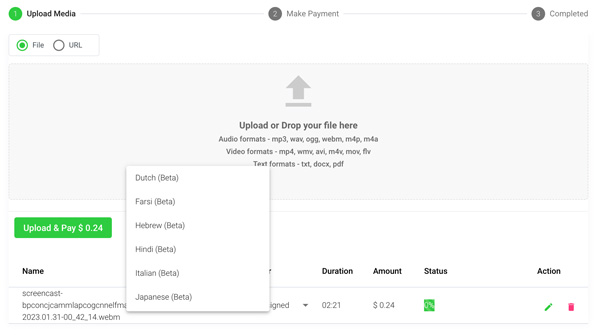
Krok 3: Automatycznie oblicz i zapłać łączną kwotę
Po przygotowaniu chińskiego (kantońskiego, tradycyjnego) pliku audio lub wideo i załadowaniu go do Speak, automatycznie obliczy on całkowity koszt (w wersji próbnej otrzymujesz 30 minut za darmo - skorzystaj z tego!).
Możesz zapłacić, subskrybując spersonalizowany plan za pomocą naszego kalkulatora czasu rzeczywistego z wliczonymi minutami.
Można również dodać saldo lub płacić za przesyłanie bez planu, korzystając ze swojego karta kredytowa.
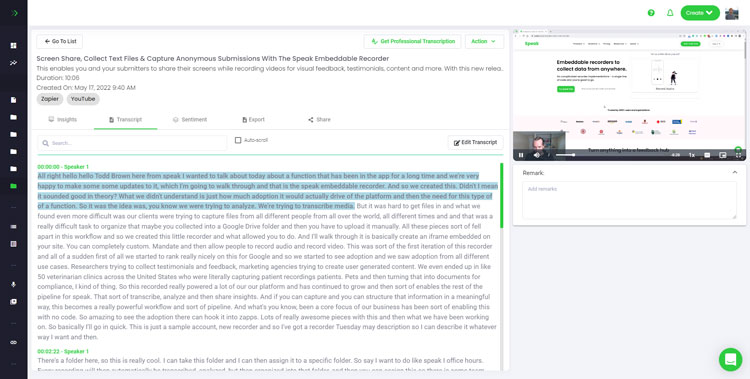
Step 4: Wait for Speak to subtitle your Chinese (Cantonese, Traditional) audio or Chinese (Cantonese, Traditional) video
Our automated subtitling software will prepare your Chinese (Cantonese, Traditional) subtitles in as little as a few minutes. Generally, Speak takes about half the audio or video length to produce the subtitles and insights.
Once completed, you will get an email notification that your Chinese (Cantonese, Traditional) subtitles is complete. That email will contain a link back to the file so you can access the interactive media player with the Chinese (Cantonese, Traditional) subtitles, analysis, and export formats ready for you.
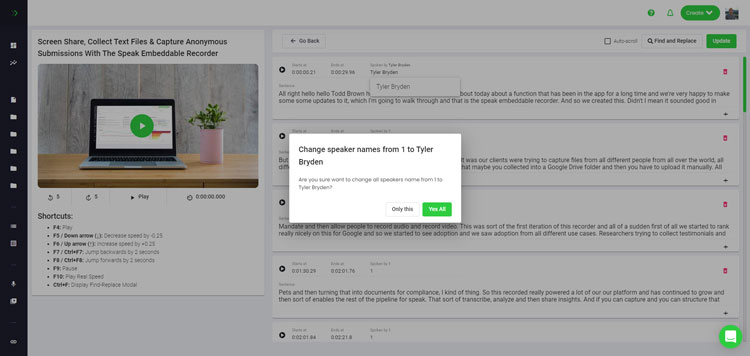
Step 5: View and edit your automated Chinese (Cantonese, Traditional) subtitles
Chcesz samodzielnie zająć się edycją napisów? W porządku! Po otrzymaniu automatycznych napisów możesz je edytować w dowolnym momencie.
Easily update speaker names, find and replace, and get your automatic Chinese (Cantonese, Traditional) subtitles up to full accuracy with our intuitive subtitles editing system.
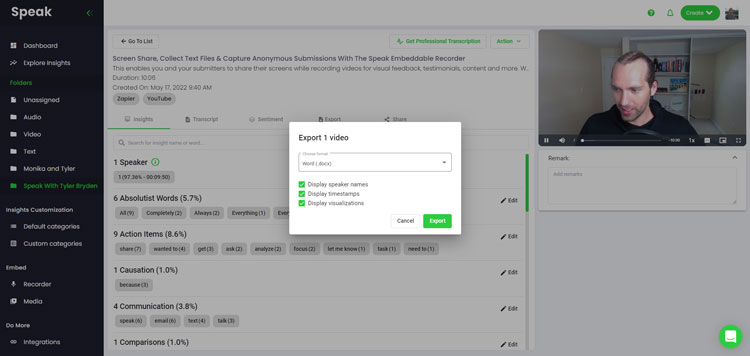
Step 6: Export your Chinese (Cantonese, Traditional) subtitles and share interactive media players
With Speak, you can easily export Chinese (Cantonese, Traditional) subtitles to many formats.
Below is a list of options for exporting your Chinese (Cantonese, Traditional) subtitles in Speak:
- Export Chinese (Cantonese, Traditional) subtitles to SRTs
- Export Chinese (Cantonese, Traditional) subtitles to VTTs
Bardziej efektywnym sposobem udostępniania napisów jest Biblioteka multimediów z możliwością udostępniania w tym plik multimedialny, spostrzeżenia sztucznej inteligencji i interaktywne napisy.
Dzięki Speak możesz zrobić o wiele więcej, aby zwiększyć wartość swoich multimediów i napisów.
Nigdy nie wahaj się wysłać nam wiadomości na czacie na żywo - zawsze służymy pomocą!
We talked about Chinese (Cantonese, Traditional) subtitling here, but you may be interested in how to subtitle in other languages instantly and easily with Speak’s intuitive subtitling and natural language processing software.
Poniżej udostępniamy materiały dotyczące wszystkich języków, w których Speak może pomóc Ci utworzyć napisy!
Dołącz do ponad 50 000 użytkowników, którzy odkryli radykalne usprawnienia w wykorzystaniu danych audio, wideo i tekstowych, aby zwiększyć wartość.
How Much Does It Cost To Subtitle Chinese (Cantonese, Traditional)?
Speak offers highly competitive pricing for Chinese (Cantonese, Traditional) subtitling compared to other subtitling solutions. For a starting user, Speak offers automated Chinese (Cantonese, Traditional) subtitling for only $0.025 USD per minute. That is only $1.50 USD per hour!
Skalujemy również nasze ceny w oparciu o ilość mediów i możemy zaoferować jeszcze większe rabaty dla dużych klientów.
So, if you have over 100 hours of Chinese (Cantonese, Traditional) subtitling per month please contact us through live chat and we will set you up with a customized price per minute to make Chinese (Cantonese, Traditional) subtitling even more affordable!
You can learn more about how to subtitle Chinese (Cantonese, Traditional) with Speak and the relevant pricing on the strona z cennikiem witryny i strona z cenami w aplikacji.
What Can You Subtitle In Chinese (Cantonese, Traditional)?
- Subtitle Chinese (Cantonese, Traditional) interviews
- Subtitle Chinese (Cantonese, Traditional) videos
- Subtitle Chinese (Cantonese, Traditional) audio
- Subtitle Chinese (Cantonese, Traditional) earnings calls
- Subtitle Chinese (Cantonese, Traditional) focus groups
- Subtitle Chinese (Cantonese, Traditional) meetings
- Subtitle Chinese (Cantonese, Traditional) phone calls
- Subtitle Chinese (Cantonese, Traditional) YouTube videos
- Subtitle Chinese (Cantonese, Traditional) Vimeo videos
- Subtitle Chinese (Cantonese, Traditional) Zoom recordings
- Subtitle Chinese (Cantonese, Traditional) Google Meet recordings
- Napisy do nagrań Microsoft Teams
- Subtitle Chinese (Cantonese, Traditional) podcasts
I wiele więcej!
W jakich innych językach można używać napisów?
Speak ma już użytkowników z ponad 90 krajów, a my ciągle otrzymujemy prośby o dodanie napisów i analiz w różnych językach.
Dlatego stale dodajemy więcej języków do Speak! Oto tylko niektóre z rosnącej listy języków, które oferuje Speak:
- Jak tworzyć napisy w języku afrikaans
- Jak tworzyć napisy w języku arabskim (Egipt)
- Jak tworzyć napisy w języku arabskim (Irak)
- Jak tworzyć napisy w języku arabskim (Izrael)
- Jak tworzyć napisy w języku arabskim (Jordania)
- Jak tworzyć napisy w języku arabskim (Kuwejt)
- Jak tworzyć napisy w języku arabskim (Liban)
- Jak tworzyć napisy w języku arabskim (Oman)
- Jak tworzyć napisy w języku arabskim (Autonomia Palestyńska)
- Jak tworzyć napisy w języku arabskim (Katar)
- Jak tworzyć napisy w języku arabskim (Arabia Saudyjska)
- Jak tworzyć napisy w języku arabskim (Syryjska Republika Arabska)
- Jak tworzyć napisy w języku arabskim (Zjednoczone Emiraty Arabskie)
- Jak tworzyć nowoczesne napisy w języku arabskim (Bahrajn)
- Jak tworzyć napisy w języku ormiańskim
- Jak tworzyć napisy w języku bułgarskim
- Jak tworzyć napisy w języku katalońskim
- Jak tworzyć napisy w języku chińskim (kantońskim, tradycyjnym)
- Jak tworzyć napisy w języku chińskim (uproszczonym)
- Jak tworzyć chińskie (tradycyjne) napisy
- Jak tworzyć napisy w języku chorwackim
- Jak tworzyć czeskie napisy
- Jak tworzyć napisy w języku duńskim
- Jak tworzyć napisy w języku holenderskim
- Jak tworzyć napisy w języku angielskim
- Jak tworzyć napisy w języku angielskim (Australia)
- Jak tworzyć napisy w języku angielskim (indyjskim)
- Jak tworzyć napisy w języku angielskim (irlandzkim)
- Jak tworzyć napisy w języku angielskim (Nowa Zelandia)
- Jak tworzyć napisy w języku angielskim (szkockim)
- Jak tworzyć napisy w języku angielskim (południowoafrykańskim)
- Jak tworzyć napisy w języku angielskim (Wielka Brytania)
- Jak tworzyć napisy w języku angielskim (Stany Zjednoczone)
- Jak tworzyć napisy w języku estońskim
- Jak tworzyć napisy w języku perskim
- Jak tworzyć fińskie napisy
- Jak tworzyć napisy w języku francuskim
- Jak tworzyć napisy w języku francuskim (Kanada)
- Jak tworzyć napisy w języku niemieckim
- Jak tworzyć napisy w języku niemieckim (szwajcarskim)
- Jak tworzyć greckie napisy
- Jak tworzyć napisy w języku gudżarati
- Jak tworzyć napisy w języku hebrajskim
- Jak tworzyć napisy w języku hindi
- Jak tworzyć napisy w języku węgierskim
- Jak tworzyć napisy w języku islandzkim
- Jak tworzyć napisy w języku indonezyjskim
- Jak tworzyć irlandzkie napisy
- Jak tworzyć włoskie napisy
- Jak tworzyć japońskie napisy
- Jak tworzyć napisy w języku kannada
- Jak tworzyć napisy w języku koreańskim
- Jak tworzyć napisy w języku łotewskim
- Jak tworzyć napisy w języku litewskim
- Jak tworzyć napisy w języku malajskim
- Jak tworzyć napisy w języku malajalam
- Jak tworzyć napisy w języku norweskim
- Jak tworzyć napisy w języku perskim
- Jak stworzyć polskie napisy
- Jak tworzyć napisy w języku portugalskim
- Jak tworzyć napisy w języku portugalskim (brazylijskim)
- Jak tworzyć napisy w języku portugalskim (Portugalia)
- Jak tworzyć napisy w języku rumuńskim
- Jak tworzyć rosyjskie napisy
- Jak tworzyć napisy w języku słowackim
- Jak tworzyć napisy w języku słoweńskim
- Jak tworzyć napisy w języku hiszpańskim
- Jak tworzyć napisy w języku hiszpańskim (Meksyk)
- Jak tworzyć napisy w języku szwedzkim
- Jak tworzyć napisy w języku tamilskim
- Jak tworzyć napisy w języku telugu
- Jak tworzyć napisy w języku tajskim
- Jak tworzyć napisy w języku tureckim
- Jak tworzyć ukraińskie napisy
- Jak tworzyć napisy w języku wietnamskim
Teraz jest ich znacznie więcej!
Można zobaczyć cała lista języków obsługiwanych przez Speak zarówno za pośrednictwem oprogramowania, jak i interfejsów API.
Poznaj Speak AI
Speak AI to platforma badawcza poświęcona technologii głosowej i sztucznej inteligencji. Transkrypcja w ponad 100 językach, analiza języka naturalnego (NLP), analiza sentymentu, agenci AI i doradztwo biznesowe.
Zautomatyzowana transkrypcja
AI Voice Agents
Doradztwo i wdrażanie AI
Narzędzie do analizy tekstu
Asystent spotkań AI
 English
  Español
  Français
  Italiano
  العربية
  Português do Brasil
  Nederlands
  Deutsch
  עִבְרִית
  Русский
  日本語
日本語  Polski
  Čeština
  Українська
  Slovenščina
  Svenska
  Ελληνικά
  Norsk bokmål
  简体中文
简体中文  Türkçe
  Català
  Magyar
  한국어
한국어  Slovenčina
  Suomi
Suomi