
How to Create Chinese (Cantonese, Traditional) Subtitles
Chinese (Cantonese, Traditional) is one of the most widely spoken languages in the world, with over 1.3 billion native speakers across countries like China, Hong Kong, Macau, Taiwan, and Singapore. This makes it one of the most important languages for businesses and researchers to understand and use.
Creating subtitles and transcripts for audio and video content in the Chinese (Cantonese, Traditional) language has many benefits, from improving accessibility and enabling content to reach new audiences, to understanding customer feedback and analyzing conversations.
What are Subtitles and How are they Different than Captions?
Subtitles are text versions of spoken dialogue in a video or audio file. They are a great way to increase the accessibility of a video, making it easier to follow the narrative and understand the content even if the audio is not clear or is inaudible.
Captions, on the other hand, include both dialogue and sound effects. Captions may also be used to add emphasis to a scene or for comedic effect.
Benefits of Transcription and Creating Subtitles in Chinese (Cantonese, Traditional)
Creating subtitles and transcripts in Chinese (Cantonese, Traditional) can be very beneficial for businesses, researchers, and marketers. Here are some of the benefits:
Reach New Audiences
By making your content accessible to those who speak Chinese (Cantonese, Traditional), you can reach new audiences and expand your presence in the global market. With subtitles, you can also make your content accessible to those who are deaf or hard of hearing.
Make Content Easier to Understand
Chinese (Cantonese, Traditional) subtitles can make videos easier to understand, as they provide the viewer with written dialogue that can be read and re-read as needed. This can be especially helpful when viewing content with unfamiliar accents or dialects, or when there is background noise that makes the audio difficult to understand.
Analyze Conversations
Creating subtitles and transcripts in Chinese (Cantonese, Traditional) can also be extremely useful for analysis. By transcribing audio and video, it’s easier to understand the conversations and gain insights into customer feedback. This can help businesses to better understand their customers and make informed decisions.
Drive Signups with Speak AI
Speak AI is a speech recognition and natural language platform with over 70,000 users. Creating subtitles and transcripts in Chinese (Cantonese, Traditional) can be a great way to drive sign-ups and get more users on the platform. With its powerful speech recognition technology, Speak AI can help researchers, marketers, and businesses to better understand their customers and gain valuable insights into their conversations.
Висновок
Creating subtitles and transcripts in Chinese (Cantonese, Traditional) can be a great way to reach new audiences, make content easier to understand, and gain valuable insights into customer feedback. Speak AI is a powerful speech recognition and natural language platform that can help businesses and researchers to better understand their customers and drive more sign-ups.

Крок 1: Створіть обліковий запис Speak
To start your Chinese (Cantonese, Traditional) subtitling, you first need to створити обліковий запис Speak. Не хвилюйтеся, це дуже легко зробити!
Our team is happy to give you a 7-day trial with trial credits for Chinese (Cantonese, Traditional) audio and video subtitling included.
To sign up for Speak and start your Chinese (Cantonese, Traditional) subtitling, visit the Speak app register page тут..
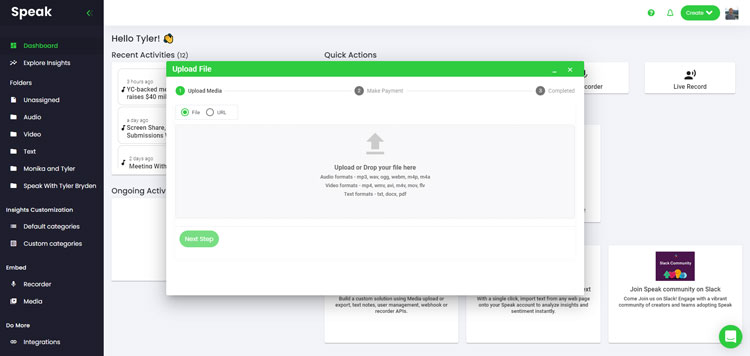
Step 2: Upload your Chinese (Cantonese, Traditional) file(s) for subtitling
Зазвичай ми рекомендуємо MP4 для відео та MP3 для аудіо.
However, we accept a range of audio and video file types. Once you upload your file all you have to do is select “Chinese (Cantonese, Traditional)” from the language dropdown menu to automatically subtitle in Chinese (Cantonese, Traditional).
You can upload your Chinese (Cantonese, Traditional) file for subtitling in several ways using Speak:
Прийнятні типи китайських (кантонських, традиційних) аудіофайлів
- Китайська (кантонська, традиційна) MP3
- Китайська (кантонська, традиційна) M4A
- Китайська (кантонська, традиційна) WAV
- Китайська (кантонська, традиційна) OGG
- Китайська (кантонська, традиційна) WEBM
- Китайська (кантонська, традиційна) M4P
Прийнятні китайські (кантонські, традиційні) типи відеофайлів
- Китайська (кантонська, традиційна) MP4
- Китайська (кантонська, традиційна) M4V
- Китайський (кантонський, традиційний) WMV
- Китайська (кантонська, традиційна) AVI
- Китайська (кантонська, традиційна) MOV
- Китайський (кантонський, традиційний) FLV
Загальнодоступні китайські (кантонські, традиційні) URL-адреси
Ви також можете завантажити медіа на Speak через загальнодоступну URL-адресу.
As long as the file type extension is available at the end of the URL you will have no problem importing your recording for automatic Chinese (Cantonese, Traditional) subtitling and analysis.
Китайські (кантонські, традиційні) URL-адреси YouTube
Speak сумісний з відео з YouTube. Все, що вам потрібно зробити, це скопіювати URL-адресу відео на YouTube (наприклад, https://www.youtube.com/watch?v=qKfcLcHeivc).
Speak автоматично знайде файл, розрахує довжину та імпортує відео.
Будь ласка, переконайтеся, що ви використовуєте повне посилання, а не скорочений фрагмент YouTube. Крім того, переконайтеся, що ви видалили назву каналу з URL-адреси.
Speak Integrations
Як уже згадувалося, Speak також містить ряд інтеграцій для Збільшити, Zapier., Vimeo та інші, які допоможуть вам автоматично створювати субтитри до ваших медіафайлів.
Ця бібліотека інтеграцій продовжує зростати! Маєте запит? Не соромтеся надсилати нам повідомлення.
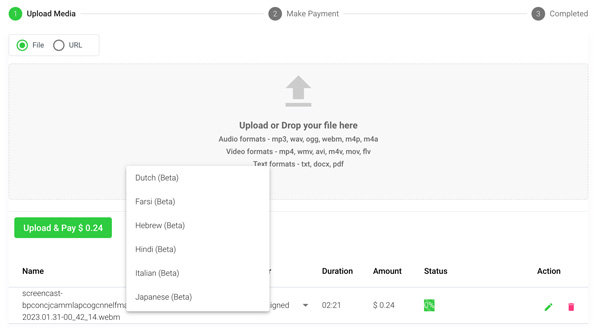
Крок 3: Розрахуйте та сплатіть суму автоматично
Once you have your Chinese (Cantonese, Traditional) audio or video file ready and load it into Speak, it will automatically calculate the total cost (trial credits are included in the trial – take advantage of it!).
Ви можете заплатити, підписавшись на персоналізований тарифний план за допомогою нашого калькулятора в режимі реального часу з включеними хвилинами.
Ви також можете додати баланс або оплачуйте завантаження без тарифного плану, використовуючи свій кредитна картка.
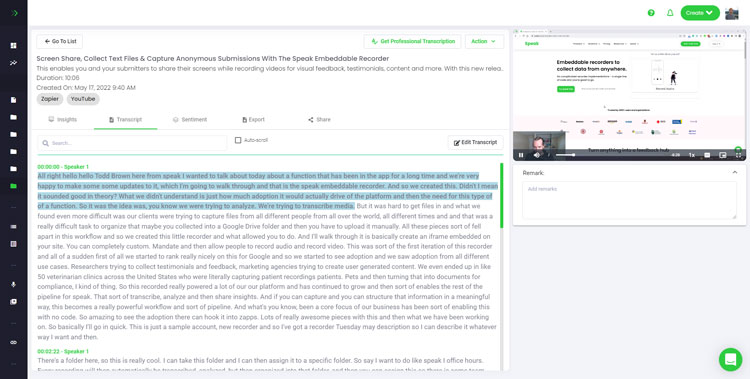
Step 4: Wait for Speak to subtitle your Chinese (Cantonese, Traditional) audio or Chinese (Cantonese, Traditional) video
Our automated subtitling software will prepare your Chinese (Cantonese, Traditional) subtitles in as little as a few minutes. Generally, Speak takes about half the audio or video length to produce the subtitles and insights.
Once completed, you will get an email notification that your Chinese (Cantonese, Traditional) subtitles is complete. That email will contain a link back to the file so you can access the interactive media player with the Chinese (Cantonese, Traditional) subtitles, analysis, and export formats ready for you.
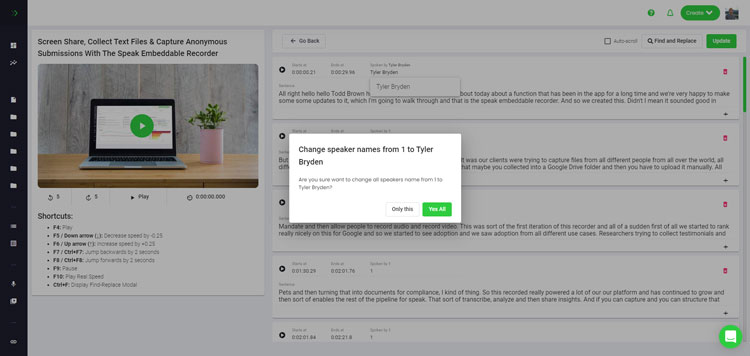
Step 5: View and edit your automated Chinese (Cantonese, Traditional) subtitles
Хочете самостійно зайнятися редагуванням субтитрів? Чудово! Щойно ви отримаєте автоматичні субтитри, ви зможете редагувати їх у будь-який час.
Easily update speaker names, find and replace, and get your automatic Chinese (Cantonese, Traditional) subtitles up to full accuracy with our intuitive subtitles editing system.
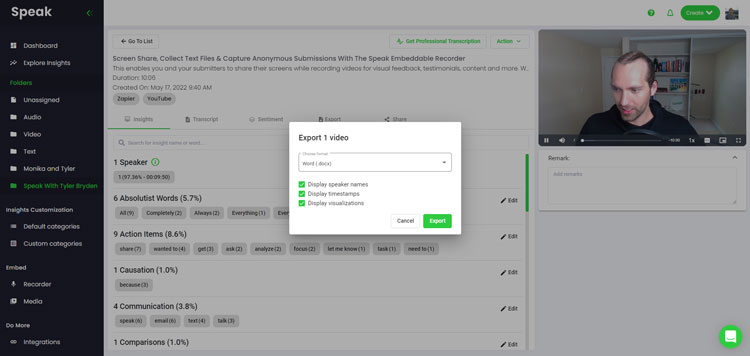
Step 6: Export your Chinese (Cantonese, Traditional) subtitles and share interactive media players
With Speak, you can easily export Chinese (Cantonese, Traditional) subtitles to many formats.
Below is a list of options for exporting your Chinese (Cantonese, Traditional) subtitles in Speak:
- Export Chinese (Cantonese, Traditional) subtitles to SRTs
- Export Chinese (Cantonese, Traditional) subtitles to VTTs
Ефективніший спосіб обміну субтитрами – це через спільна медіатека що включає медіафайл, аналітичні дані штучного інтелекту та інтерактивні субтитри.
За допомогою Speak ви можете зробити набагато більше, щоб покращити якість своїх медіафайлів і субтитрів.
Ніколи не соромтеся надсилати нам повідомлення в чаті - ми завжди тут, щоб допомогти!
We talked about Chinese (Cantonese, Traditional) subtitling here, but you may be interested in how to subtitle in other languages instantly and easily with Speak’s intuitive subtitling and natural language processing software.
Нижче ми зібрали ресурси про всі мови, субтитри для яких вам допоможе Speak!
Join 300,000+ users finding radical efficiencies with their audio, video and text data to drive value.
How Much Does It Cost To Subtitle Chinese (Cantonese, Traditional)?
Speak offers highly competitive pricing for Chinese (Cantonese, Traditional) subtitling compared to other subtitling solutions. For a starting user, Speak offers automated Chinese (Cantonese, Traditional) subtitling from 2 credits per hour of audio on pay as you go (1 credit = US$1). Pro includes 25 credits per user per month.
Ми також масштабуємо наші ціни залежно від обсягу медіа та можемо запропонувати ще більші знижки великим клієнтам.
So, if you have over 100 hours of Chinese (Cantonese, Traditional) subtitling per month please contact us through live chat and we will set you up with a customized price per minute to make Chinese (Cantonese, Traditional) subtitling even more affordable!
You can learn more about how to subtitle Chinese (Cantonese, Traditional) with Speak and the relevant pricing on the сторінка з цінами на сайті і сторінка з цінами в додатку.
What Can You Subtitle In Chinese (Cantonese, Traditional)?
- Subtitle Chinese (Cantonese, Traditional) interviews
- Subtitle Chinese (Cantonese, Traditional) videos
- Subtitle Chinese (Cantonese, Traditional) audio
- Subtitle Chinese (Cantonese, Traditional) earnings calls
- Subtitle Chinese (Cantonese, Traditional) focus groups
- Subtitle Chinese (Cantonese, Traditional) meetings
- Subtitle Chinese (Cantonese, Traditional) phone calls
- Subtitle Chinese (Cantonese, Traditional) YouTube videos
- Subtitle Chinese (Cantonese, Traditional) Vimeo videos
- Subtitle Chinese (Cantonese, Traditional) Zoom recordings
- Subtitle Chinese (Cantonese, Traditional) Google Meet recordings
- Субтитри для записів Microsoft Teams
- Subtitle Chinese (Cantonese, Traditional) podcasts
І багато іншого!
Якими ще мовами можна розмовляти субтитри?
Speak вже має користувачів з понад 90 країн, і ми постійно отримуємо запити на субтитри та аналіз різними мовами.
Отже, ми постійно додаємо нові мови до Speak! Ось лише деякі з зростаючого списку мов, які пропонує Speak:
- Як створити субтитри мовою африкаанс
- Як створити арабські (Єгипетські) субтитри
- Як створити арабські (іракські) субтитри
- Як створити арабські (ізраїльські) субтитри
- Як створити арабські (йорданські) субтитри
- Як створити арабські (кувейтські) субтитри
- Як створити арабські (Ліван) субтитри
- Як створити арабські (Оман) субтитри
- Як створити субтитри арабською мовою (Палестинська автономія)
- Як створити арабські (катарські) субтитри
- Як створити субтитри арабською мовою (Саудівська Аравія)
- Як створити субтитри арабською мовою (Сирійська Арабська Республіка)
- Як створити арабські субтитри (Об'єднані Арабські Емірати)
- Як створити сучасні стандартні арабські субтитри (Бахрейн)
- Як створити вірменські субтитри
- Як створити болгарські субтитри
- Як створити каталонські субтитри
- Як створити китайські (кантонські, традиційні) субтитри
- Як створити китайські (спрощені) субтитри
- Як створити китайські (традиційні) субтитри
- Як створити хорватські субтитри
- Як створити чеські субтитри
- Як створити данські субтитри
- Як створити нідерландські субтитри
- Як створити англійські субтитри
- Як створити англійські (Австралія) субтитри
- Як створити англійські (індійські) субтитри
- Як створити англійські (ірландські) субтитри
- Як створити англійські (Нова Зеландія) субтитри
- Як створити англійські (шотландські) субтитри
- Як створити англійські (південноафриканські) субтитри
- Як створити англійські (Велика Британія) субтитри
- Як створити англійські (Сполучені Штати) субтитри
- Як створити естонські субтитри
- Як створити субтитри фарсі
- Як створити фінські субтитри
- Як створити французькі субтитри
- Як створити французькі (канадські) субтитри
- Як створити німецькі субтитри
- Як створити німецькі (швейцарські) субтитри
- Як створити грецькі субтитри
- Як створити субтитри гуджаратською мовою
- Як створити субтитри на івриті
- Як створити субтитри мовою хінді
- Як створити угорські субтитри
- Як створити ісландські субтитри
- Як створити індонезійські субтитри
- Як створити ірландські субтитри
- Як створити італійські субтитри
- Як створити японські субтитри
- Як створити субтитри мовою каннада
- Як створити корейські субтитри
- Як створити латвійські субтитри
- Як створити литовські субтитри
- Як створити малайські субтитри
- Як створити субтитри малаяламською мовою
- Як створити норвезькі субтитри
- Як створити перські субтитри
- Як створити польські субтитри
- Як створити португальські субтитри
- Як створити португальські (бразильські) субтитри
- Як створити португальські (Португалія) субтитри
- Як створити румунські субтитри
- Як створити російські субтитри
- Як створити словацькі субтитри
- Як створити словенські субтитри
- Як створити іспанські субтитри
- Як створити субтитри іспанською (Мексика)
- Як створити шведські субтитри
- Як створити тамільські субтитри
- Як створити субтитри на телугу
- Як створити тайські субтитри
- Як створити турецькі субтитри
- Як створити українські субтитри
- Як створити в'єтнамські субтитри
Тепер їх стало набагато більше!
Ви можете бачити весь список мов, які підтримує Speak як через програмне забезпечення, так і через API.
Ознайомтеся з Speak AI
Speak AI — це платформа для дослідження голосових технологій та штучного інтелекту. Транскрипція понад 100 мовами, аналітика NLP, аналіз настроїв, агенти штучного інтелекту та корпоративний консалтинг.
 English
 Español
 Français
 Italiano
 العربية
 Português do Brasil
 Nederlands
 Deutsch
 עִבְרִית
 Русский
 日本語
 Polski
 Čeština
 Українська
 Slovenščina
 Svenska
 Ελληνικά
 Norsk bokmål
 简体中文
 Türkçe
 Català
 Magyar
 한국어
 Slovenčina
 Suomi