
How To Translate English to Chinese (Traditional)
Translating English to Chinese (Traditional) is super simple!
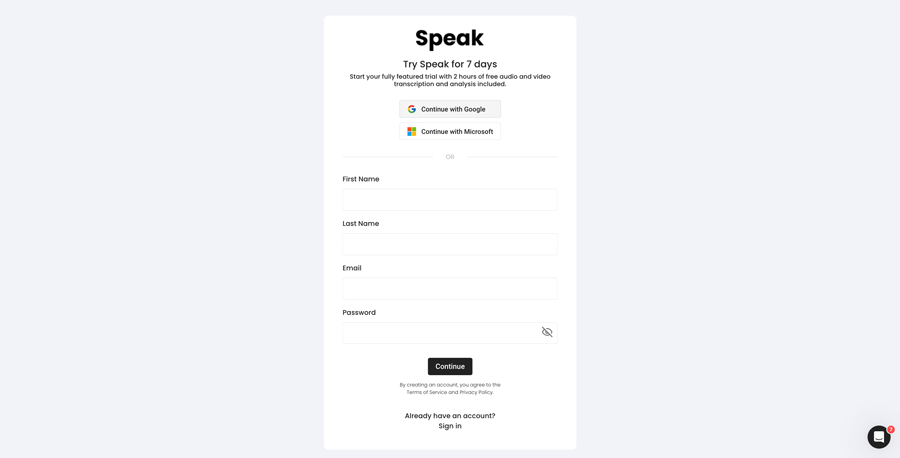
الخطوة 1: التسجيل للتحدث
سجل للتحدث باستخدام هذا الرابط.
Once you register, you can instantly begin translating your English to Chinese (Traditional) file(s).
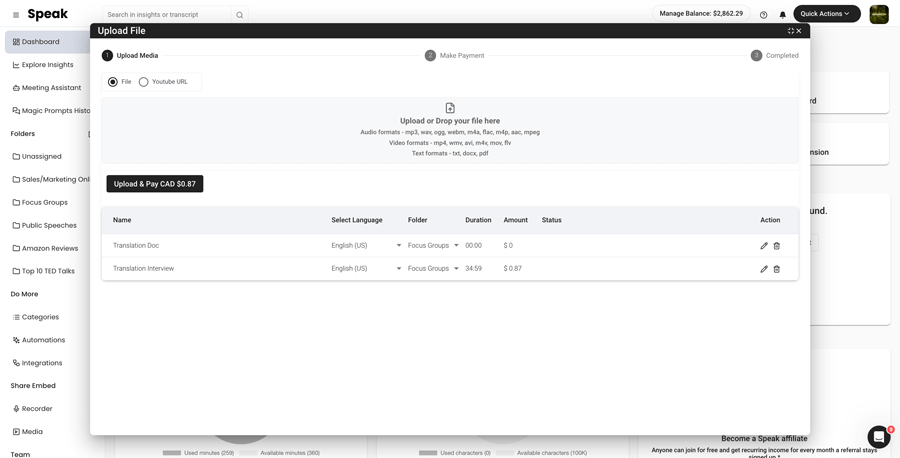
الخطوة 2: قم بتحميل ملفاتك باللغة الإنجليزية
بمجرد تسجيل الدخول، سيتم إعادة توجيهك إلى لوحة المعلومات.
بمجرد وصولك إلى هناك، يمكنك تحديد الإجراء السريع "تحميل جديد".
في Speak، يمكنك تحميل ونسخ وترجمة ملفات الصوت والفيديو والنصوص بسلاسة في آن واحد! إذا كان لديك فيديو، فيمكنك استخدام محول الفيديو إلى نص بالذكاء الاصطناعي لتحويل الفيديو إلى نص؛ إذا كان لديك صوت، يمكنك استخدام محول الصوت إلى نص بالذكاء الاصطناعي لتحويل الصوت إلى نص. يمكنك أيضًا نسخ مقاطع فيديو يوتيوب و استخدم الذكاء الاصطناعي لتحليل النص.
تنسيقات الصوت والفيديو المدعومة
- تحويل MP4 إلى نص
- تحويل M4A إلى نص
- تحويل MP3 إلى نص
- تحويل OGG إلى نص
- تحويل MPEG إلى نص
- تحويل WEBM إلى نص
- تحويل MOV إلى نص
- تحويل M4P إلى نص
- تحويل WMV إلى نص
- تحويل WAV إلى نص
- تحويل M4V إلى نص
- تحويل الصوت والفيديو إلى نص
- تحويل AVI إلى نص
- تحويل الفيديو إلى مقال
لغات النسخ المدعومة
- كيفية نسخ اللغة الأفريكانية
- كيفية نسخ اللغة العربية في مصر
- كيفية نسخ اللغة العربية في العراق
- كيفية نسخ اللغة العربية إلى إسرائيل
- كيفية نسخ اللغة العربية في الأردن
- كيفية نسخ اللغة العربية في الكويت
- كيفية نسخ اللغة العربية في لبنان
- كيفية نسخ اللغة العربية الحديثة القياسية في البحرين
- كيفية نسخ النص العربي الحديث القياسي
- كيفية نسخ اللغة العربية في عمان
- كيفية نسخ السلطة الفلسطينية باللغة العربية
- كيفية نسخ النص العربي في قطر
- كيفية نسخ النصوص العربية في المملكة العربية السعودية
- كيفية نسخ اللغة العربية الجمهورية العربية السورية
- كيفية نسخ اللغة العربية في الإمارات العربية المتحدة
- كيفية نسخ اللغة الأرمنية
- كيفية نسخ اللغة البلغارية
- كيفية نسخ اللغة الكاتالونية
- كيفية نسخ اللغة الصينية الكانتونية التقليدية
- كيفية نسخ اللغة الصينية المبسطة
- كيفية نسخ اللغة الكرواتية
- كيفية نسخ اللغة التشيكية
- كيفية نسخ اللغة الدنماركية
- كيفية نسخ اللغة الهولندية
- كيفية نسخ النصوص الإنجليزية في أستراليا
- كيفية نسخ النص الإنجليزي البريطاني
- كيفية نسخ النص الإنجليزي الهندي
- كيفية نسخ النص الإنجليزي الأيرلندي
- كيفية نسخ النص الإنجليزي في نيوزيلندا
- كيفية نسخ اللغة الإنجليزية الاسكتلندية
- كيفية نسخ اللغة الإنجليزية إلى جنوب أفريقيا
- كيفية نسخ النص الإنجليزي في المملكة المتحدة
- كيفية نسخ النص باللغة الإنجليزية في الولايات المتحدة
- كيفية نسخ اللغة الإستونية
- كيفية نسخ اللغة الفارسية
- كيفية نسخ اللغة الفنلندية
- كيفية نسخ النص الفرنسي الكندي
- كيفية نسخ الكلمات الألمانية السويسرية
- كيفية نسخ النص الألماني
- كيفية نسخ اللغة اليونانية
- كيفية نسخ اللغة الغوجاراتية
- كيفية نسخ اللغة العبرية
- كيفية نسخ النص باللغة الهندية
- كيفية نسخ اللغة المجرية
- كيفية نسخ اللغة الأيسلندية
- كيفية نسخ النص باللغة الإندونيسية
- كيفية نسخ المقابلات
- كيفية نسخ اللغة الأيرلندية
- كيفية نسخ النص الإيطالي
- كيفية نسخ النص الياباني
- كيفية نسخ النص باللغة الكانادية
- كيفية نسخ النص الكوري
- كيفية نسخ اللغة اللاتفية
- كيفية نسخ اللغة الليتوانية
- كيفية نسخ اللغة الملايوية
- كيفية نسخ اللغة المالايالامية
- كيفية نسخ النص النرويجي
- كيفية نسخ اللغة الفارسية
- كيفية نسخ النصوص البولندية
- كيفية نسخ اللغة البرتغالية البرازيلية
- كيفية نسخ اللغة البرتغالية
- كيفية نسخ اللغة البرتغالية
- كيفية نسخ اللغة الرومانية
- كيفية نسخ النص باللغة الروسية
- كيفية نسخ اللغة السلوفاكية
- كيفية نسخ اللغة السلوفينية
- كيفية نسخ اللغة الإسبانية في المكسيك
- كيفية نسخ النص السويدي
- كيفية نسخ النص التاميلى
- كيفية نسخ النص التيلجو
- كيفية نسخ النص التايلاندي
- كيفية نسخ النص باللغة التركية
- كيفية نسخ اللغة الأوكرانية
- كيفية نسخ النص الفيتنامي
- نسخ اللغة الدنماركية
- نسخ اللغة الإنجليزية
- نسخ الفرنسية
- نسخ اللغة الألمانية
- نسخ البرتغالية
- نسخ اللغة الاسبانية
لدينا أيضا مساعد اجتماعات الذكاء الاصطناعي و مسجل الملاحظات بالذكاء الاصطناعي لالتقاط الاجتماعات تلقائيًا بالإضافة إلى مسجل صوت, مسجل صوت وفيديو قابل للتضمين، و مسجل الشاشة.
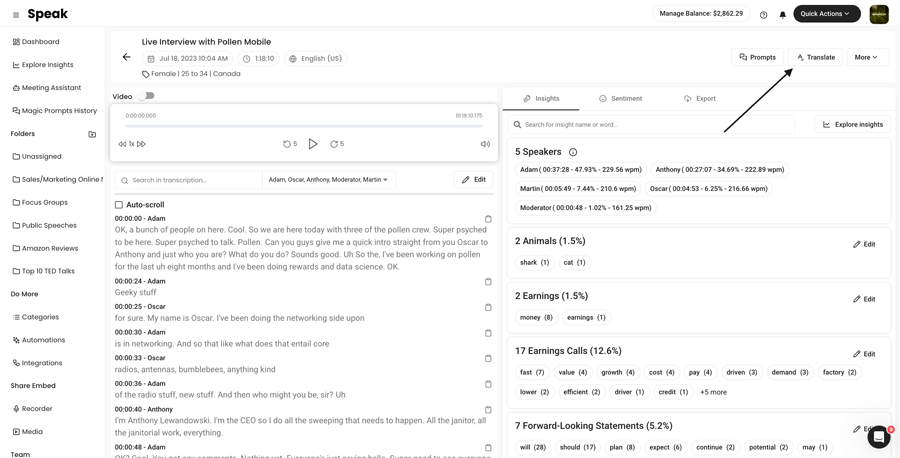
Step 3: Translate Your English file(s) to Chinese (Traditional)
بمجرد تحميل الملف، قم بزيارة ملفك واختر "ترجمة".
إذا كان ملفًا صوتيًا أو فيديو، فسوف يسألك Speak إذا كنت تريد الاحتفاظ بأسماء المتحدثين وطوابع الوقت في الترجمة.
هل تريد ترجمة العديد من الملفات في وقت واحد؟ لا مشكلة!
You can view the files you want to automatically translate from English to Chinese (Traditional) from the folder level and instantly translate as many files as you need with our artificial intelligence translation in just a few clicks.
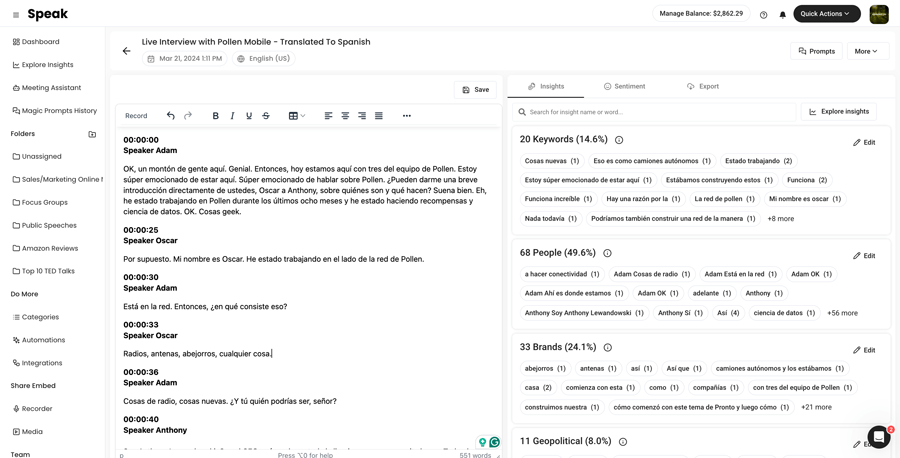
Step 4: That’s It! View, Analyze, Modify & Export Your New Chinese (Traditional) file(s)
بمجرد الانتهاء من الترجمة، سيتم تنبيهك وستشاهد مستندًا جديدًا في نفس المجلد الذي يوجد فيه الملف الأصلي.
سيتم تسمية الملف بنفس الاسم ولكن مع شرطة تشير إلى أنه الإصدار المترجم.
هل تحتاج إلى دعم في الترجمة الإنجليزية الخاصة بك؟
نحن هنا دائمًا وسعداء بمساعدتك في Speak!
كل ما عليك فعله هو إرسال رسالة لنا عبر الدردشة المباشرة في الزاوية اليمنى السفلية وسنضمن لك الاستعداد للنجاح.
هل أنت مهتم بترجمة اللغة الإنجليزية أو لغات أخرى إلى لغات مختلفة؟ اطلع على قائمتنا الكاملة للترجمات المدعومة اللغات هنا.
Automatic, accurate, instant AI translation from English to Chinese (Traditional) is here for you.
سجل للتحدث باستخدام هذا الرابط and begin translating English to Chinese (Traditional) today.
Unlocking Global Opportunities: Translate English to Chinese (Traditional)
In today’s fast-paced, digital-first world, the ability to communicate across languages and cultures is more than just a nice-to-have; it’s a necessity. For businesses and researchers looking to make their mark on the global stage, translating content from English to Chinese (Traditional) is a key step in bridging communication gaps and unlocking a world of opportunities.
Why Translate English to Chinese (Traditional)?
Chinese (Traditional) is not just another language; it’s a gateway to engaging with one of the largest markets and most dynamic cultures in the world. By translating content, whether it’s audio, video, or text, from English to Chinese (Traditional), you’re opening doors to millions of potential customers, collaborators, and audiences.
The Value of Automatic Translation
Automatic translation, powered by AI and NLP (Natural Language Processing), has revolutionized how we approach language barriers. Companies like Speak AI are at the forefront of this transformation, providing seamless, accurate, and efficient translation services that save time, reduce costs, and enhance communication.
Benefits for Researchers and Businesses
Translating content automatically can significantly benefit researchers and businesses in several ways:
- Global Reach: Broaden your audience or research impact by making your work accessible to Traditional Chinese speakers.
- فعّالة من حيث التكلفة: Automatic translation is a cost-efficient alternative to manual translation, reducing the need for expensive language services.
- Time-Saving: AI-driven translation drastically cuts down the time required to translate documents, allowing you to focus on your core activities.
- Accuracy and Context: Advanced NLP algorithms ensure translations are not only accurate but also contextually relevant.
Exploring the Global Landscape: English and Chinese (Traditional)
Where Are These Languages Popular?
English and Chinese (Traditional) are among the most spoken languages worldwide. English serves as a lingua franca in many parts of the globe, while Traditional Chinese is predominantly used in Taiwan, Hong Kong, and Macau. Impressively, these regions are not only cultural and economic hubs but also pivotal in international relations and global trade networks.
Interesting Statistics and History
The history of Traditional Chinese dates back thousands of years, making it one of the oldest written languages still in use today. Despite the adoption of Simplified Chinese in mainland China, Traditional Chinese has maintained its significance, with over 20 million people using it as their primary language.
Delving Into Languages: English vs. Chinese (Traditional)
حقائق ممتعة
English and Chinese (Traditional) are fascinating in their uniqueness. For instance, Chinese is a tonal language, meaning the tone in which a word is spoken can change its meaning entirely. English, on the other hand, places a heavy emphasis on syntax and word order.
الاختلافات والتشابهات
While English and Chinese (Traditional) may seem worlds apart, they share common goals in communication and expression. Both languages have rich vocabularies and deep literary traditions that reflect the cultures they originated from. However, their writing systems, grammar rules, and phonetics are majorly different, offering unique challenges and rewards to learners and translators alike.
Speak AI: Your Partner in Breaking Language Barriers
At Speak AI, we understand the importance of accurate and nuanced translation. Our software integrates NLP, large language models, data visualization, and Generative AI to deliver top-quality English to Chinese (Traditional) translation. Whether you’re looking to automatically translate meetings, research papers, or global campaigns, we offer what you need with a 4.9 rating on G2 and a trusted user base of over 150K.
AI Meeting Assistant: A Game-Changer for Global Communication
Our AI Meeting Assistant is an innovative tool that joins meetings on platforms like Microsoft Teams, Zoom, Google Meet, and Webex. It automatically transcribes and analyzes conversations, offering real-time translation and insights. This tool is an invaluable asset for researchers and businesses aiming to excel in a multi-lingual, multi-cultural world.
The Path Forward
Translating English to Chinese (Traditional) is not just about converting words; it’s about connecting worlds. With the right tools and technologies, like those offered by Speak AI, businesses and researchers can overcome language barriers, embrace cultural diversity, and thrive in the global marketplace.
Embrace the future of communication. Explore how Speak AI can transform your approach to language and unlock the full potential of your global endeavors.
التعليمات
What locations are English and Chinese (Traditional) popular?
English is a global lingua franca, while Traditional Chinese is primarily used in Taiwan, Hong Kong, and Macau. Both languages play crucial roles in international business, education, and diplomacy.
What are some fun facts about English and Chinese (Traditional)?
English’s syntax and word order drastically impact its meaning, whereas Chinese’s tone can change a word’s meaning. Both languages have evolved richly over centuries, reflecting their cultures and histories.
What are the differences and similarities between English and Chinese (Traditional)?
While vastly different in grammar, phonetics, and writing system, both languages serve the fundamental purpose of communication and expression, showcasing the diversity and unity of human language.
ترجمة اللغة الإنجليزية إلى اللغات الأخرى المدعومة:
- ترجمة من الإنجليزية إلى العربية (مصر)
- ترجمة من الإنجليزية إلى العربية (العراق)
- ترجمة من الإنجليزية إلى العربية (إسرائيل)
- ترجمة من الإنجليزية إلى العربية (الأردن)
- ترجمة من الإنجليزية إلى العربية (الكويت)
- ترجمة من الإنجليزية إلى العربية (لبنان)
- ترجمة من الإنجليزية إلى العربية (عمان)
- ترجمة من الإنجليزية إلى العربية (السلطة الفلسطينية)
- ترجمة من الإنجليزية إلى العربية (قطر)
- ترجمة من الإنجليزية إلى العربية (المملكة العربية السعودية)
- ترجمة من الإنجليزية إلى العربية (الجمهورية العربية السورية)
- ترجمة من الإنجليزية إلى العربية (الإمارات العربية المتحدة)
- ترجمة المعيار الحديث من الإنجليزية إلى العربية (البحرين)
- ترجمة من الإنجليزية إلى الأرمينية
- ترجمة من الإنجليزية إلى البلغارية
- ترجمة من الإنجليزية إلى الكتالانية
- ترجمة من الإنجليزية إلى الصينية (الكانتونية، التقليدية)
- ترجمة من الإنجليزية إلى الصينية (مبسطة)
- ترجمة من الإنجليزية إلى الصينية (التقليدية)
- ترجمة من الإنجليزية إلى الكرواتية
- ترجمة من الإنجليزية إلى التشيكية
- ترجمة من الإنجليزية إلى الدنماركية
- ترجمة من الإنجليزية إلى الهولندية
- ترجمة من الإنجليزية إلى الإنجليزية
- ترجمة من الإنجليزية إلى الإنجليزية (أستراليا)ترجمة من الإنجليزية إلى الإنجليزية (الهند)
- ترجمة من الإنجليزية إلى الإنجليزية (أيرلندا)
- ترجمة من الإنجليزية إلى الإنجليزية (نيوزيلندا)
- ترجمة من الإنجليزية إلى الإنجليزية (الاسكتلندية)
- الترجمة من الإنجليزية إلى الإنجليزية (جنوب أفريقيا)
- ترجمة من الإنجليزية إلى الإنجليزية (المملكة المتحدة)
- ترجمة من الإنجليزية إلى الإنجليزية (الولايات المتحدة)
- ترجمة من الإنجليزية إلى الإستونية
- ترجمة من الإنجليزية إلى الفارسية
- ترجمة من الإنجليزية إلى الفنلندية
- ترجمة من الإنجليزية إلى الفرنسية
- ترجمة من الإنجليزية إلى الفرنسية (كندا)
- ترجمة من الإنجليزية إلى الألمانية
- ترجمة من الإنجليزية إلى الألمانية (السويسرية)
- ترجمة من الإنجليزية إلى اليونانية
- ترجمة من الإنجليزية إلى الغوجاراتية
- ترجمة من الإنجليزية إلى العبرية
- ترجمة من الإنجليزية إلى الهندية
- ترجمة من الإنجليزية إلى المجرية
- ترجمة من الإنجليزية إلى الأيسلندية
- ترجمة من الإنجليزية إلى الإندونيسية
- ترجمة من الإنجليزية إلى الأيرلندية
- ترجمة من الإنجليزية إلى الإيطالية
- ترجمة من الإنجليزية إلى اليابانية
- ترجمة من الإنجليزية إلى الكانادا
- ترجمة من الإنجليزية إلى الكورية
- ترجمة من الإنجليزية إلى اللاتفية
- ترجمة من الإنجليزية إلى الليتوانية
- ترجمة من الإنجليزية إلى الملايوية
- ترجمة من الإنجليزية إلى المالايالامية
- ترجمة من الإنجليزية إلى النرويجية
- ترجمة من الإنجليزية إلى الفارسية
- ترجمة من الإنجليزية إلى البولندية
- ترجمة من الإنجليزية إلى البرتغالية
- ترجمة من الإنجليزية إلى البرتغالية (البرازيلية)
- ترجمة من الإنجليزية إلى البرتغالية (البرتغال)
- ترجمة من الإنجليزية إلى الرومانية
- ترجمة من الإنجليزية إلى الروسية
- ترجمة من الإنجليزية إلى السلوفاكية
- ترجمة من الإنجليزية إلى السلوفينية
- ترجمة من الإنجليزية إلى الإسبانية
- ترجمة من الإنجليزية إلى الإسبانية (المكسيك)
- ترجمة من الإنجليزية إلى السويدية
- ترجمة من الإنجليزية إلى التاميلية
- ترجمة من الإنجليزية إلى التيلجو
- ترجمة من الإنجليزية إلى التايلاندية
- ترجمة من الإنجليزية إلى التركية
- ترجمة من الإنجليزية إلى الأوكرانية
- ترجمة من الإنجليزية إلى الفيتنامية
Translate & Transcribe with Speak AI
Speak AI supports transcription and analysis in 100+ languages. Upload your audio or video and get instant AI-powered transcription, translation assistance, and NLP analytics.
 English
 Español
 Français
 Italiano
 العربية
 Português do Brasil
 Nederlands
 Deutsch
 עִבְרִית
 Русский
 日本語
 Polski
 Čeština
 Українська
 Slovenščina
 Svenska
 Ελληνικά
 Norsk bokmål
 简体中文
 Türkçe
 Català
 Magyar
 한국어
 Slovenčina
 Suomi