
How To Translate English to Chinese (Traditional)
Translating English to Chinese (Traditional) is super simple!
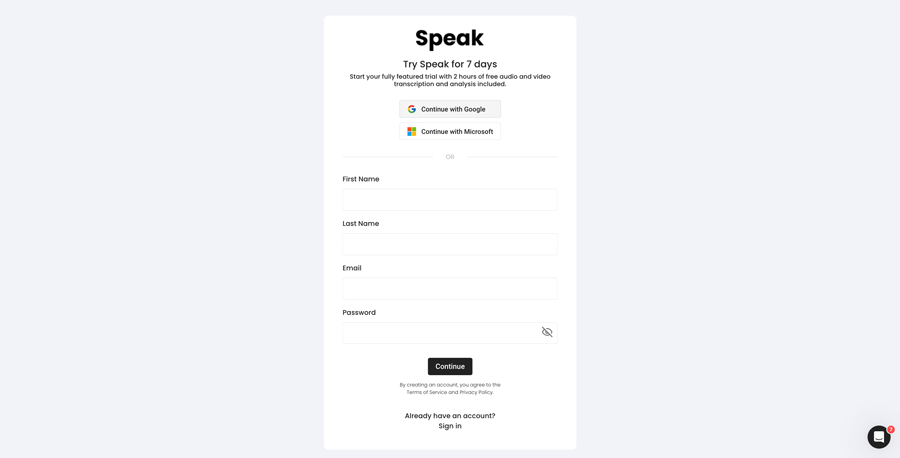
Krok 1: Zarejestruj się w Speak
Zarejestruj się w serwisie Speak za pomocą ten link.
Once you register, you can instantly begin translating your English to Chinese (Traditional) file(s).
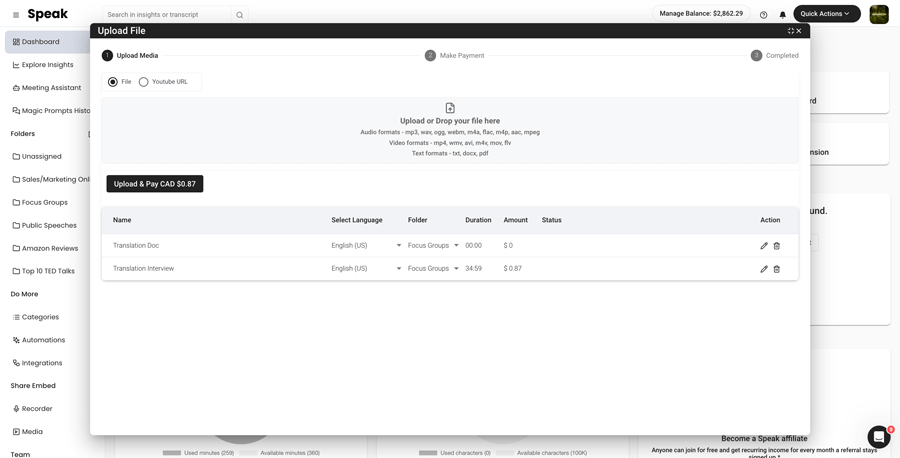
Step 2: Upload Your English file(s)
Po zalogowaniu się zostaniesz przekierowany na pulpit nawigacyjny.
Tam możesz wybrać Szybką akcję “Nowe przesłanie”.
W Speak możesz płynnie przesyłać, transkrybować i tłumaczyć pliki audio, wideo i tekstowe jednocześnie! Jeśli masz wideo, możesz skorzystać z naszego Konwerter wideo AI na tekst aby przekonwertować wideo na tekst; jeśli masz dźwięk, możesz użyć naszego Konwerter audio na tekst AI do konwersji dźwięku na tekst. Można również transkrypcja filmów z YouTube oraz wykorzystanie sztucznej inteligencji do analizy tekstu.
Obsługiwane formaty audio i wideo
- Konwersja MP4 na tekst
- Konwertuj M4A na tekst
- Konwersja MP3 na tekst
- Konwertuj OGG na tekst
- Konwersja MPEG na tekst
- Konwertuj WEBM na tekst
- Konwertuj MOV na tekst
- Konwertuj M4P na tekst
- Konwertuj WMV na tekst
- Konwertuj WAV na tekst
- Konwertuj M4V na tekst
- Zamiana audio-wideo na tekst
- Konwertuj AVI na tekst
- Konwertuj wideo na artykuł
Obsługiwane języki transkrypcji
- Jak transkrybować afrikaans
- Jak transkrybować arabski Egipt
- Jak transkrybować arabski irakcki
- Jak transkrybować arabski Izrael
- Jak transkrybować arabski Jordania
- Jak transkrybować arabski Kuwejt
- Jak transkrybować arabski Liban
- Jak transkrybować arabski nowoczesny standard bahrajński
- Jak transkrybować arabski nowoczesny
- Jak transkrybować arabski Oman
- Jak transkrybować arabski Palestyńska Autorytet
- Jak transkrybować arabski Katar
- Jak transkrybować arabski Arabia Saudyjska
- Jak transkrybować arabski Syryjska Republika Arabska
- Jak transkrybować arabski Zjednoczone Emiraty Arabskie
- Jak transkrybować język ormiański
- Jak transkrybować bułgarski
- Jak transkrybować język kataloński
- Jak transkrybować chiński kantońskiego tradycyjnego
- Jak transkrybować chiński uproszczony
- Jak transkrybować chorwacki
- Jak transkrybować czeski
- Jak transkrybować duński
- Jak transkrybować niderlandzki
- Jak transkrybować język angielski w Australii
- Jak transkrybować angielski brytyjski
- Jak transkrybować angielski indyjski
- Jak transkrybować angielski irlandzki
- Jak transkrybować angielski Nowa Zelandia
- Jak transkrybować angielski szkocki
- Jak transkrybować angielski z Afryki Południowej
- Jak transkrybować angielski Zjednoczone Królestwo
- Jak transkrybować angielski ze Stanów Zjednoczonych
- Jak transkrybować estoński
- Jak transkrybować perski
- Jak transkrybować fiński
- Jak transkrybować francuski kanadyjski
- Jak transkrybować niemiecki Szwajcaria
- Jak transkrybować niemiecki
- Jak transkrybować grecki
- Jak transkrybować gujarati
- Jak transkrybować hebrajski
- Jak transkrybować hindi
- Jak transkrybować węgierski
- Jak transkrybować islandzki
- Jak transkrybować indonezyjski
- Jak transkrybować wywiady
- Jak transkrybować irlandzki
- Jak transkrybować włoski
- Jak transkrybować japoński
- Jak transkrybować kannada
- Jak transkrybować koreański
- Jak transkrybować łotewski
- Jak transkrybować litewski
- Jak transkrybować malajski
- Jak transkrybować malajalam
- Jak transkrybować język norweski
- Jak transkrybować perski
- Jak transkrybować polski
- Jak transkrybować portugalizki brazylijski
- Jak transkrybować portugalski Portugalia
- Jak transkrybować portugalski
- Jak transkrybować rumuński
- Jak transkrybować rosyjski
- Jak transkrybować słowacki
- Jak transkrybować słoweński
- Jak transkrybować język hiszpański Meksyk
- Jak transkrybować szwedzki
- Jak transkrybować tamilski
- Jak transkrybować telugu
- Jak Transkrybować Tajski
- Jak transkrybować turecki
- Jak transkrybować ukraiński
- Jak transkrybować wietnamski
- Transkrypcja duńska
- Transkrybuj angielski
- Transkrypcja języka francuskiego
- Transkrypcja języka niemieckiego
- Transkrypcja języka portugalskiego
- Transkrypcja języka hiszpańskiego
Mamy również Asystent spotkań AI oraz Notatnik AI do automatycznego rejestrowania spotkań, a także dyktafon, wbudowany rejestrator audio i wideooraz rejestrator ekranu.
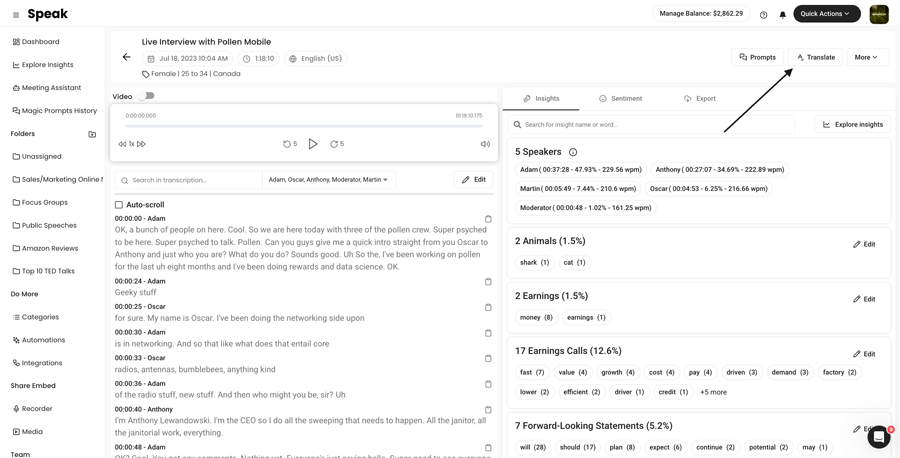
Step 3: Translate Your English file(s) to Chinese (Traditional)
Po przesłaniu pliku po prostu odwiedź swój plik i wybierz “Przetłumacz”.
Jeśli jest to plik audio i wideo, Speak zapyta Cię, czy chcesz zachować nazwy głośników i znaczniki czasu w tłumaczeniu.
Chcesz przetłumaczyć wiele plików na raz? Bez problemu!
You can view the files you want to automatically translate from English to Chinese (Traditional) from the folder level and instantly translate as many files as you need with our artificial intelligence translation in just a few clicks.
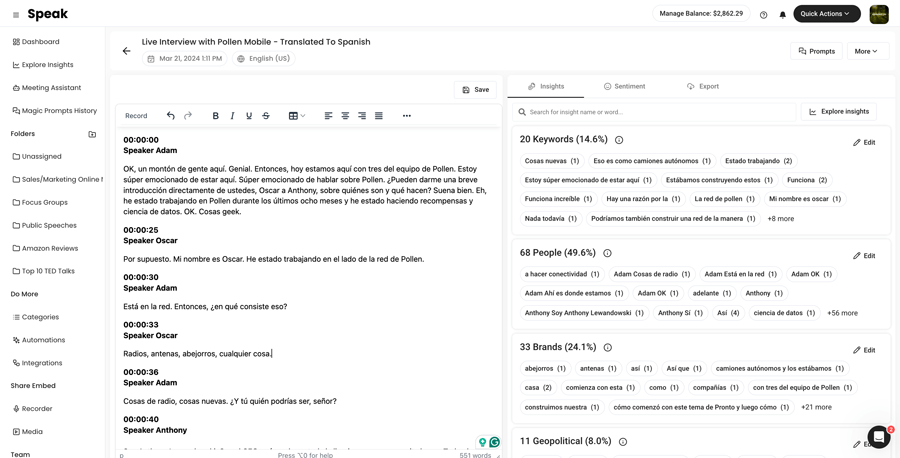
Step 4: That’s It! View, Analyze, Modify & Export Your New Chinese (Traditional) file(s)
Po zakończeniu tłumaczenia otrzymasz powiadomienie i zobaczysz nowy dokument w tym samym folderze, w którym znajduje się plik oryginalny.
Plik będzie miał taką samą nazwę, ale z myślnikiem wskazującym, że jest to wersja przetłumaczona.
Need support with your English translation?
Zawsze jesteśmy dostępni i chętnie pomagamy w Speak!
Wyślij nam wiadomość na czacie na żywo w prawym dolnym rogu i upewnimy się, że będziesz gotów do sukcesu.
Interested in translating English or other languages to different languages? View our entire list of supported translation języki tutaj.
Automatic, accurate, instant AI translation from English to Chinese (Traditional) is here for you.
Zarejestruj się w serwisie Speak za pomocą ten link and begin translating English to Chinese (Traditional) today.
Unlocking Global Opportunities: Translate English to Chinese (Traditional)
In today’s fast-paced, digital-first world, the ability to communicate across languages and cultures is more than just a nice-to-have; it’s a necessity. For businesses and researchers looking to make their mark on the global stage, translating content from English to Chinese (Traditional) is a key step in bridging communication gaps and unlocking a world of opportunities.
Why Translate English to Chinese (Traditional)?
Chinese (Traditional) is not just another language; it’s a gateway to engaging with one of the largest markets and most dynamic cultures in the world. By translating content, whether it’s audio, video, or text, from English to Chinese (Traditional), you’re opening doors to millions of potential customers, collaborators, and audiences.
The Value of Automatic Translation
Automatic translation, powered by AI and NLP (Natural Language Processing), has revolutionized how we approach language barriers. Companies like Speak AI are at the forefront of this transformation, providing seamless, accurate, and efficient translation services that save time, reduce costs, and enhance communication.
Benefits for Researchers and Businesses
Translating content automatically can significantly benefit researchers and businesses in several ways:
- Global Reach: Broaden your audience or research impact by making your work accessible to Traditional Chinese speakers.
- Opłacalne: Automatic translation is a cost-efficient alternative to manual translation, reducing the need for expensive language services.
- Time-Saving: AI-driven translation drastically cuts down the time required to translate documents, allowing you to focus on your core activities.
- Accuracy and Context: Advanced NLP algorithms ensure translations are not only accurate but also contextually relevant.
Exploring the Global Landscape: English and Chinese (Traditional)
Where Are These Languages Popular?
English and Chinese (Traditional) are among the most spoken languages worldwide. English serves as a lingua franca in many parts of the globe, while Traditional Chinese is predominantly used in Taiwan, Hong Kong, and Macau. Impressively, these regions are not only cultural and economic hubs but also pivotal in international relations and global trade networks.
Interesting Statistics and History
The history of Traditional Chinese dates back thousands of years, making it one of the oldest written languages still in use today. Despite the adoption of Simplified Chinese in mainland China, Traditional Chinese has maintained its significance, with over 20 million people using it as their primary language.
Delving Into Languages: English vs. Chinese (Traditional)
Fun Facts
English and Chinese (Traditional) are fascinating in their uniqueness. For instance, Chinese is a tonal language, meaning the tone in which a word is spoken can change its meaning entirely. English, on the other hand, places a heavy emphasis on syntax and word order.
Różnice i podobieństwa
While English and Chinese (Traditional) may seem worlds apart, they share common goals in communication and expression. Both languages have rich vocabularies and deep literary traditions that reflect the cultures they originated from. However, their writing systems, grammar rules, and phonetics are majorly different, offering unique challenges and rewards to learners and translators alike.
Speak AI: Your Partner in Breaking Language Barriers
At Speak AI, we understand the importance of accurate and nuanced translation. Our software integrates NLP, large language models, data visualization, and Generative AI to deliver top-quality English to Chinese (Traditional) translation. Whether you’re looking to automatically translate meetings, research papers, or global campaigns, we offer what you need with a 4.9 rating on G2 and a trusted user base of over 150K.
AI Meeting Assistant: A Game-Changer for Global Communication
Our AI Meeting Assistant is an innovative tool that joins meetings on platforms like Microsoft Teams, Zoom, Google Meet, and Webex. It automatically transcribes and analyzes conversations, offering real-time translation and insights. This tool is an invaluable asset for researchers and businesses aiming to excel in a multi-lingual, multi-cultural world.
The Path Forward
Translating English to Chinese (Traditional) is not just about converting words; it’s about connecting worlds. With the right tools and technologies, like those offered by Speak AI, businesses and researchers can overcome language barriers, embrace cultural diversity, and thrive in the global marketplace.
Embrace the future of communication. Explore how Speak AI can transform your approach to language and unlock the full potential of your global endeavors.
Często zadawane pytania
What locations are English and Chinese (Traditional) popular?
English is a global lingua franca, while Traditional Chinese is primarily used in Taiwan, Hong Kong, and Macau. Both languages play crucial roles in international business, education, and diplomacy.
What are some fun facts about English and Chinese (Traditional)?
English’s syntax and word order drastically impact its meaning, whereas Chinese’s tone can change a word’s meaning. Both languages have evolved richly over centuries, reflecting their cultures and histories.
What are the differences and similarities between English and Chinese (Traditional)?
While vastly different in grammar, phonetics, and writing system, both languages serve the fundamental purpose of communication and expression, showcasing the diversity and unity of human language.
Translate English To These Other Supported Languages:
- Translate English-to-Arabic (Egypt)
- Translate English-to-Arabic (Iraq)
- Translate English-to-Arabic (Israel)
- Translate English-to-Arabic (Jordan)
- Translate English-to-Arabic (Kuwait)
- Translate English-to-Arabic (Lebanon)
- Translate English-to-Arabic (Oman)
- Translate English-to-Arabic (Palestinian Authority)
- Translate English-to-Arabic (Qatar)
- Translate English-to-Arabic (Saudi Arabia)
- Translate English-to-Arabic (Syrian Arab Republic)
- Translate English-to-Arabic (United Arab Emirates)
- Translate English-to-Arabic Modern Standard (Bahrain)
- Translate English-to-Armenian
- Translate English-to-Bulgarian
- Translate English-to-Catalan
- Translate English-to-Chinese (Cantonese, Traditional)
- Translate English-to-Chinese (Simplified)
- Translate English-to-Chinese (Traditional)
- Translate English-to-Croatian
- Translate English-to-Czech
- Translate English-to-Danish
- Translate English-to-Dutch
- Translate English-to-English
- Translate English-to-English (Australia)Translate English-to-English (India)
- Translate English-to-English (Ireland)
- Translate English-to-English (New Zealand)
- Translate English-to-English (Scottish)
- Translate English-to-English (South African)
- Translate English-to-English (United Kingdom)
- Translate English-to-English (United States)
- Translate English-to-Estonian
- Translate English-to-Farsi
- Translate English-to-Finnish
- Translate English-to-French
- Translate English-to-French (Canada)
- Translate English-to-German
- Translate English-to-German (Swiss)
- Translate English-to-Greek
- Translate English-to-Gujarati
- Translate English-to-Hebrew
- Translate English-to-Hindi
- Translate English-to-Hungarian
- Translate English-to-Icelandic
- Translate English-to-Indonesian
- Translate English-to-Irish
- Translate English-to-Italian
- Translate English-to-Japanese
- Translate English-to-Kannada
- Translate English-to-Korean
- Translate English-to-Latvian
- Translate English-to-Lithuanian
- Translate English-to-Malay
- Translate English-to-Malayalam
- Translate English-to-Norwegian
- Translate English-to-Persian
- Translate English-to-Polish
- Translate English-to-Portuguese
- Translate English-to-Portuguese (Brazilian)
- Translate English-to-Portuguese (Portugal)
- Translate English-to-Romanian
- Translate English-to-Russian
- Translate English-to-Slovak
- Translate English-to-Slovenian
- Translate English-to-Spanish
- Translate English-to-Spanish (Mexico)
- Translate English-to-Swedish
- Translate English-to-Tamil
- Translate English-to-Telugu
- Translate English-to-Thai
- Translate English-to-Turkish
- Translate English-to-Ukrainian
- Translate English-to-Vietnamese
Translate & Transcribe with Speak AI
Speak AI supports transcription and analysis in 100+ languages. Upload your audio or video and get instant AI-powered transcription, translation assistance, and NLP analytics.
 English
 Español
 Français
 Italiano
 العربية
 Português do Brasil
 Nederlands
 Deutsch
 עִבְרִית
 Русский
 日本語
 Polski
 Čeština
 Українська
 Slovenščina
 Svenska
 Ελληνικά
 Norsk bokmål
 简体中文
 Türkçe
 Català
 Magyar
 한국어
 Slovenčina
 Suomi