
How To Translate Yiddish to English (United States)
Translating Yiddish to English (United States) is super simple!
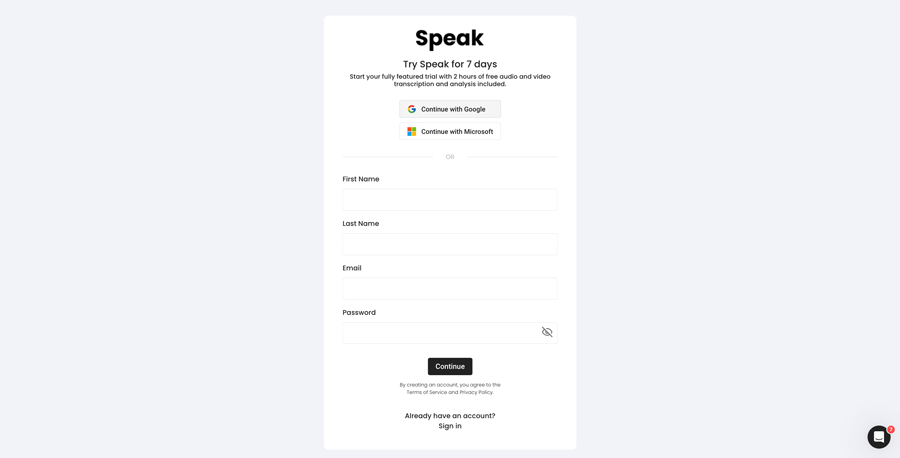
Passo 1: Registrazione a Speak
Registrarsi a Speak utilizzando questo link.
Once you register, you can instantly begin translating your Yiddish to English (United States) file(s).
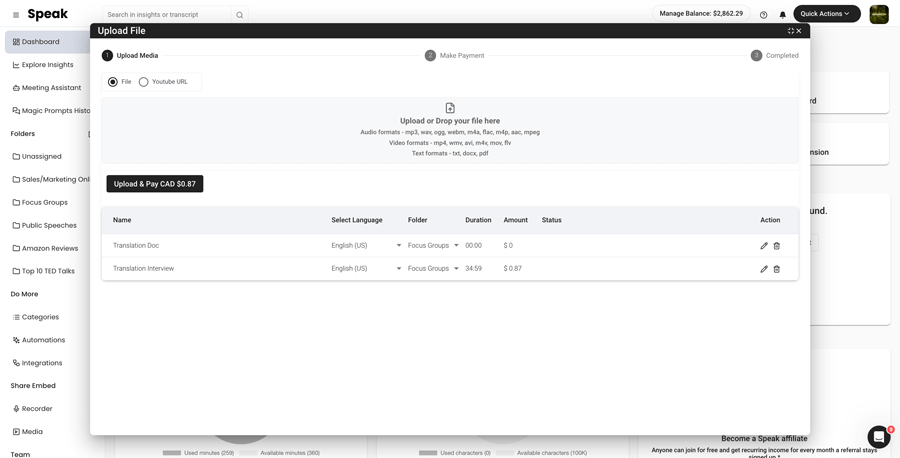
Step 2: Upload Your Yiddish file(s)
Non appena si effettua il login, si viene reindirizzati alla dashboard.
A questo punto, è possibile selezionare l'azione rapida "Nuovo caricamento".
In Speak è possibile caricare, trascrivere e tradurre file audio, video e di testo in una sola volta! Se avete un video, potete usare il nostro Convertitore video-testo AI per convertire i video in testo; se si dispone di audio, è possibile utilizzare il nostro Convertitore audio-testo AI per convertire l'audio in testo. È anche possibile trascrivere i video di YouTube e utilizzare l'intelligenza artificiale per analizzare il testo.
Formati audio e video supportati
- Convertire MP4 in testo
- Convertire M4A in testo
- Convertire MP3 in testo
- Convertire OGG in testo
- Convertire MPEG in testo
- Convertire WEBM in testo
- Convertire MOV in testo
- Convertire M4P in testo
- Convertire WMV in testo
- Convertire WAV in testo
- Convertire M4V in testo
- Da audio-video a testo
- Convertire AVI in testo
- Convertire video in articoli
Lingue di trascrizione supportate
- Come trascrivere l'afrikaans
- Come trascrivere l'arabo in Egitto
- Come trascrivere l'arabo iracheno
- Come trascrivere Israele in arabo
- Come trascrivere la Giordania araba
- Come trascrivere l'arabo in Kuwait
- Come trascrivere il Libano arabo
- Come trascrivere l'arabo standard moderno del Bahrain
- Come trascrivere l'arabo standard moderno
- Come trascrivere l'arabo in Oman
- Come trascrivere l'arabo dell'Autorità Palestinese
- Come trascrivere l'arabo del Qatar
- Come trascrivere l'arabo in Arabia Saudita
- Come trascrivere l'arabo Repubblica Araba Siriana
- Come trascrivere l'arabo U.A.E.
- Come trascrivere l'armeno
- Come trascrivere il bulgaro
- Come trascrivere il catalano
- Come trascrivere il cinese cantonese tradizionale
- Come trascrivere il cinese semplificato
- Come trascrivere il croato
- Come trascrivere il ceco
- Come trascrivere il danese
- Come trascrivere l'olandese
- Come trascrivere l'inglese in Australia
- Come trascrivere l'inglese britannico
- Come trascrivere l'inglese indiano
- Come trascrivere l'irlandese inglese
- Come trascrivere l'inglese in Nuova Zelanda
- Come trascrivere lo scozzese inglese
- Come trascrivere l'inglese sudafricano
- Come trascrivere l'inglese Regno Unito
- Come trascrivere l'inglese Stati Uniti
- Come trascrivere l'estone
- Come trascrivere il farsi
- Come trascrivere il finlandese
- Come trascrivere il Canada francese
- Come trascrivere la Svizzera tedesca
- Come trascrivere il tedesco
- Come trascrivere il greco
- Come trascrivere il gujarati
- Come trascrivere l'ebraico
- Come trascrivere l'hindi
- Come trascrivere l'ungherese
- Come trascrivere l'islandese
- Come trascrivere l'indonesiano
- Come trascrivere le interviste
- Come trascrivere l'irlandese
- Come trascrivere l'italiano
- Come trascrivere il giapponese
- Come trascrivere il Kannada
- Come trascrivere il coreano
- Come trascrivere il lettone
- Come trascrivere il lituano
- Come trascrivere il malese
- Come trascrivere il malayalam
- Come trascrivere il norvegese
- Come trascrivere il persiano
- Come trascrivere il polacco
- Come trascrivere il portoghese brasiliano
- Come trascrivere il portoghese in Portogallo
- Come trascrivere il portoghese
- Come trascrivere il rumeno
- Come trascrivere il russo
- Come trascrivere lo slovacco
- Come trascrivere lo sloveno
- Come trascrivere lo spagnolo del Messico
- Come trascrivere lo svedese
- Come trascrivere il Tamil
- Come trascrivere il telugu
- Come trascrivere il thailandese
- Come trascrivere il turco
- Come trascrivere l'ucraino
- Come trascrivere il vietnamita
- Trascrivere il danese
- Trascrivere l'inglese
- Trascrivere il francese
- Trascrivere il tedesco
- Trascrivere il portoghese
- Trascrivere lo spagnolo
Abbiamo anche un Assistente riunioni AI e Annotatore AI per acquisire automaticamente le riunioni e un registratore vocale, registratore audio e video incorporabile, e registratore di schermo.
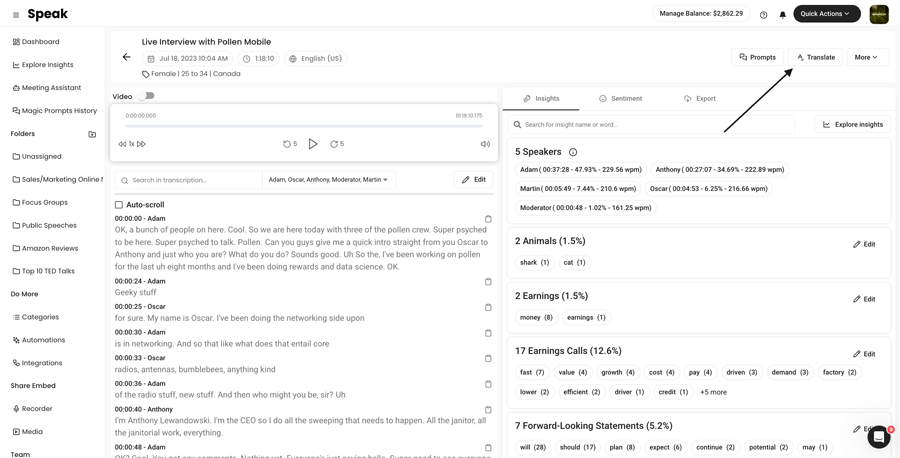
Step 3: Translate Your Yiddish file(s) to English (United States)
Una volta caricato il file, è sufficiente visitare il file e selezionare "Traduci".
Se si tratta di un file audio e video, Speak chiederà se si desidera mantenere i nomi degli oratori e gli orari nella traduzione.
Volete tradurre molti file contemporaneamente? Nessun problema!
You can view the files you want to automatically translate from Yiddish to English (United States) from the folder level and instantly translate as many files as you need with our artificial intelligence translation in just a few clicks.
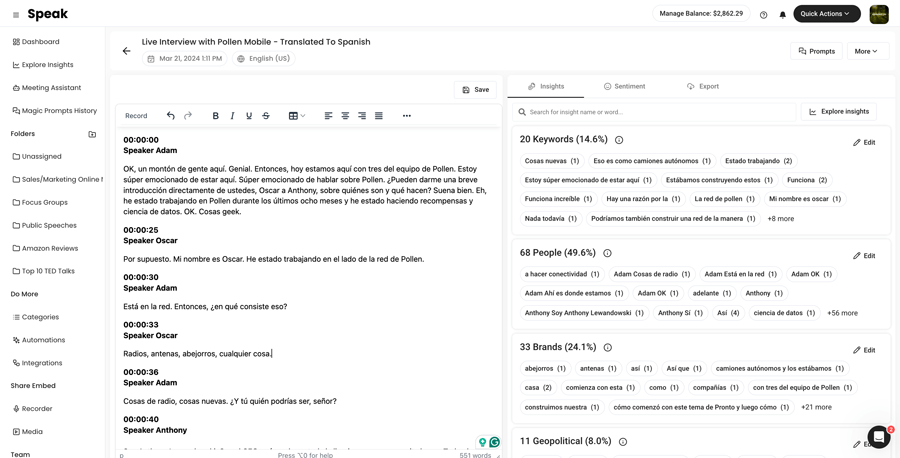
Step 4: Fatto! Visualizza, Analizza, Modifica & Esporta i Tuoi Nuovi File English (United States)
Una volta terminata la traduzione, verrete avvisati e vedrete un nuovo documento nella stessa cartella in cui si trova il file originale.
Il file avrà lo stesso nome, ma con un trattino che indica che si tratta della versione tradotta.
Need support with your Yiddish translation?
Siamo sempre qui e felici di aiutarvi a Speak!
Inviateci un messaggio sulla live chat nell'angolo in basso a destra e ci assicureremo che siate impostati per il successo.
Interested in translating Yiddish or other languages to different languages? View our entire list of supported translation lingue qui.
Automatic, accurate, instant AI translation from Yiddish to English (United States) is here for you.
Registrarsi a Speak utilizzando questo link and begin translating Yiddish to English (United States) today.
Translate Yiddish to English (United States) with AI Translation
Locations where Yiddish and English (United States) are Popular
Yiddish is a language that originated in Central Europe among Ashkenazi Jews, combining elements of German dialects with Hebrew, Aramaic, and Slavic languages. Historically, Yiddish was spoken by Jewish communities in countries such as Germany, Poland, Russia, and the United States.
English (United States) is the primary language spoken in the United States, a country known for its cultural diversity and influence around the world. With over 300 million English speakers, the United States has a rich linguistic landscape that includes various regional accents and dialects.
Facts:
- Yiddish has its roots in the Ashkenazi Jewish communities of Central and Eastern Europe.
- English is the third most spoken language in the world, with the United States being one of the largest English-speaking countries.
- The United States has a diverse population with various ethnicities, leading to the evolution of unique American English dialects.
Facts about Yiddish and English (United States)
Yiddish:
- Yiddish is written in the Hebrew alphabet and is commonly used in religious texts and literature.
- Yiddish has influenced many English words, such as “klutz” and “schlep,” which have been adopted into everyday American English.
- Yiddish culture encompasses music, theater, and cuisine, contributing to the cultural tapestry of Jewish communities worldwide.
English (United States):
- American English has been shaped by various linguistic influences, including Native American languages, Spanish, French, and German.
- American English is known for its flexibility and adaptability, with new words and phrases constantly being added to reflect cultural changes.
- The United States is home to many English dialects, from Southern accents to New York City slang, showcasing the country’s linguistic diversity.
Differences and Similarities between Yiddish and English (United States)
While Yiddish and English are distinct languages with different origins and linguistic structures, they both play significant roles in the cultural identities of their speakers.
Differences:
- Yiddish is a fusion of Germanic and Hebrew elements, while English has evolved from Old English and Latin roots.
- Yiddish uses the Hebrew alphabet, whereas English uses the Latin alphabet.
- Yiddish grammar and syntax differ from English, with unique rules for sentence structure and word formation.
Similarities:
- Both Yiddish and English have borrowed words from other languages, enriching their vocabularies with diverse influences.
- Yiddish and English are used in literature, media, and everyday communication, reflecting the cultural heritage of their speakers.
- Advances in AI translation technology have made it easier to bridge the gap between Yiddish and English, facilitating seamless communication and understanding.
By leveraging AI translation tools, researchers, businesses, and individuals can overcome language barriers and access a wealth of information in various languages, including Yiddish and English. Whether translating historical documents, conducting multilingual research, or communicating with international partners, AI translation offers a convenient and efficient solution for linguistic challenges.
Experience the power of AI translation with Speak AI’s innovative language technology, providing accurate and reliable translations for your Yiddish to English (United States) needs.
 English
 Español
 Français
 Italiano
 العربية
 Português do Brasil
 Nederlands
 Deutsch
 עִבְרִית
 Русский
 日本語
 Polski
 Čeština
 Українська
 Slovenščina
 Svenska
 Ελληνικά
 Norsk bokmål
 简体中文
 Türkçe
 Català
 Magyar
 한국어
 Slovenčina
 Suomi