
Hoe maak je Chinese (traditionele) ondertitels
Are you looking for a way to create Chinese (Traditional) subtitles for your audio and video content? Subtitles and captions are important for making audio and video content accessible to a wider audience. In this article, we’ll explain what subtitles are, how they differ from captions, and how to create Chinese (Traditional) subtitles for your content using Speak AI’s natural language platform.
What Are Subtitles and How Are They Different From Captions?
Subtitles and captions are both forms of text that can be added to audio and video content. Subtitles are usually used for foreign language content, while captions are used for content in the same language as the audience. Subtitles represent the audio of the video in written form, while captions also include sound effects and speaker identification.
Why Create Chinese (Traditional) Subtitles?
Chinese (Traditional) is spoken by more than 1.3 billion people worldwide, primarily in East and Southeast Asia. It is the official language of Taiwan and one of the official languages of China, Singapore, and Hong Kong. Chinese (Traditional) is also spoken by many people in the United States, Canada, and other parts of the world.
Creating subtitles for audio and video content in Chinese (Traditional) can help make the content more accessible to a wider audience. Subtitles can help people with hearing impairments or those who don’t understand the language of the content to follow along with the audio and video. As a result, subtitles can help increase the reach of your content and engage more viewers.
How To Create Chinese (Traditional) Subtitles With Speak AI
Speak AI is a natural language platform that can help you create subtitles in Chinese (Traditional). The platform uses speech recognition and natural language processing technology to accurately transcribe audio and video content. Once the transcription is complete, you can create subtitles in Chinese (Traditional) in minutes.
Speak AI can help researchers, marketers, and businesses transcribe audio and video content quickly and accurately. The platform supports over 70 languages, including Chinese (Traditional), and can transcribe audio and video in any format. With Speak AI, you can quickly create subtitles in Chinese (Traditional) with no manual effort required.
Benefits Of Transcribing And Creating Subtitles In Chinese (Traditional)
Creating subtitles in Chinese (Traditional) can help you reach a wider audience and engage more viewers. Here are some of the benefits of transcribing and creating subtitles in Chinese (Traditional):
- Increases the reach of your content by making it accessible to a wider audience.
- Helps people with hearing impairments or those who don’t understand the language of the content to follow along with the audio and video.
- Saves time and effort by using automated transcription and subtitle creation tools.
- Improves the engagement and retention of viewers.
- Makes audio and video content searchable on search engines.
Conclusie
Creating subtitles in Chinese (Traditional) can help you reach a wider audience and engage more viewers. Speak AI’s natural language platform can help you quickly and accurately transcribe audio and video content in any format and create subtitles in Chinese (Traditional) in minutes. Try Speak AI today to take your content to the next level.
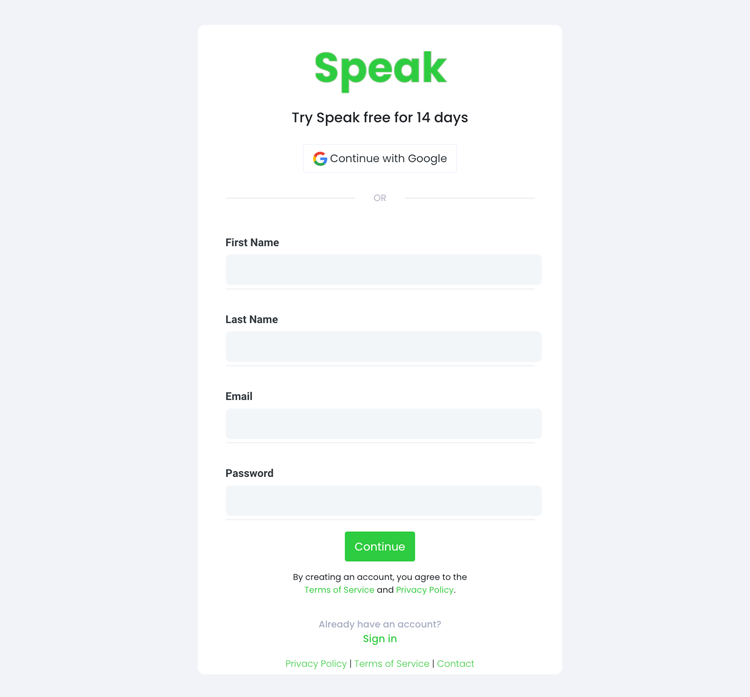
Stap 1: Maak een Speak-account aan
To start your Chinese (Traditional) subtitling, you first need to een Speak-account aanmaken. Geen zorgen, dit is supermakkelijk om te doen!
Our team is happy to give you a 7-day trial with trial credits for Chinese (Traditional) audio and video subtitling included.
To sign up for Speak and start your Chinese (Traditional) subtitling, visit the Speak app register page hier.
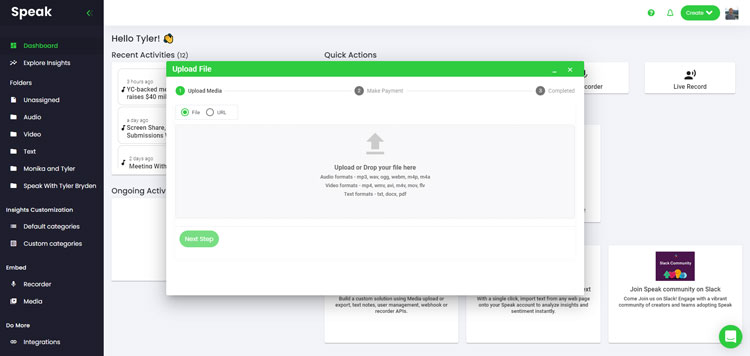
Step 2: Upload your Chinese (Traditional) file(s) for subtitling
We raden meestal MP4's aan voor video of MP3's voor audio.
However, we accept a range of audio and video file types. Once you upload your file all you have to do is select “Chinese (Traditional)” from the language dropdown menu to automatically subtitle in Chinese (Traditional).
You can upload your Chinese (Traditional) file for subtitling in several ways using Speak:
Accepted Chinese (Traditional) Audio File Types
- Chinese (Traditional) MP3
- Chinese (Traditional) M4A
- Chinese (Traditional) WAV
- Chinese (Traditional) OGG
- Chinese (Traditional) WEBM
- Chinese (Traditional) M4P
Accepted Chinese (Traditional) Video File Types
- Chinese (Traditional) MP4
- Chinese (Traditional) M4V
- Chinese (Traditional) WMV
- Chinese (Traditional) AVI
- Chinese (Traditional) MOV
- Chinese (Traditional) FLV
Publicly Available Chinese (Traditional) URLs
Je kunt ook media uploaden naar Speak via een publiek beschikbare URL.
As long as the file type extension is available at the end of the URL you will have no problem importing your recording for automatic Chinese (Traditional) subtitling and analysis.
Chinese (Traditional) YouTube URLs
Speak is compatibel met YouTube-video's. Je hoeft alleen maar de URL van de YouTube-video te kopiëren (bijvoorbeeld, https://www.youtube.com/watch?v=qKfcLcHeivc).
Speak zal automatisch het bestand vinden, de lengte berekenen en de video importeren.
Zorg ervoor dat je de volledige link gebruikt en niet het verkorte YouTube-fragment. Zorg er ook voor dat je de kanaalnaam uit de URL verwijdert.
Spreek Integraties
Zoals gezegd bevat Speak ook een reeks integraties voor Zoom, Zapier, Vimeo en meer waarmee u automatisch ondertiteling aan uw media kunt toevoegen.
Deze bibliotheek met integraties blijft groeien! Heb je een verzoek? Voel je aangemoedigd om ons een bericht te sturen.
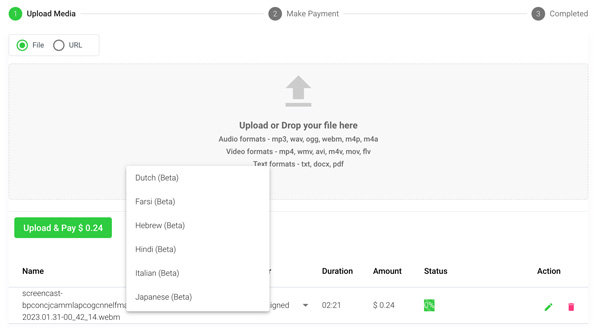
Stap 3: Bereken en betaal het totaal automatisch
Once you have your Chinese (Traditional) audio or video file ready and load it into Speak, it will automatically calculate the total cost (trial credits are included in the trial – take advantage of it!).
Je kunt betalen door je te abonneren op een persoonlijk plan met behulp van onze realtime calculator met inbegrepen minuten.
U kunt ook een balans toevoegen of betaal voor uploads zonder abonnement met je creditcard.
Step 4: Wait for Speak to subtitle your Chinese (Traditional) audio or Chinese (Traditional) video
Our automated subtitling software will prepare your Chinese (Traditional) subtitles in as little as a few minutes. Generally, Speak takes about half the audio or video length to produce the subtitles and insights.
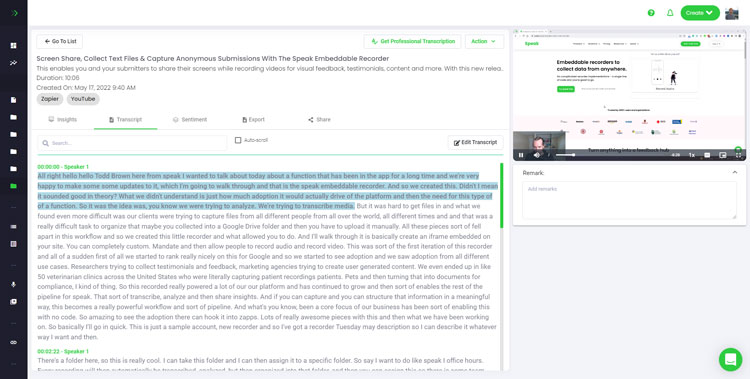
Once completed, you will get an email notification that your Chinese (Traditional) subtitles is complete. That email will contain a link back to the file so you can access the interactive media player with the Chinese (Traditional) subtitles, analysis, and export formats ready for you.
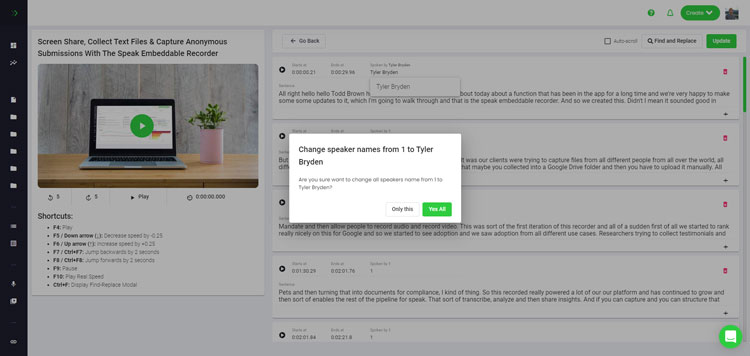
Step 5: View and edit your automated Chinese (Traditional) subtitles
Wil je de ondertiteling zelf bewerken? Geen probleem! Zodra je je automatische ondertiteling hebt ontvangen, kun je deze op elk gewenst moment bewerken.
Easily update speaker names, find and replace, and get your automatic Chinese (Traditional) subtitles up to full accuracy with our intuitive subtitles editing system.
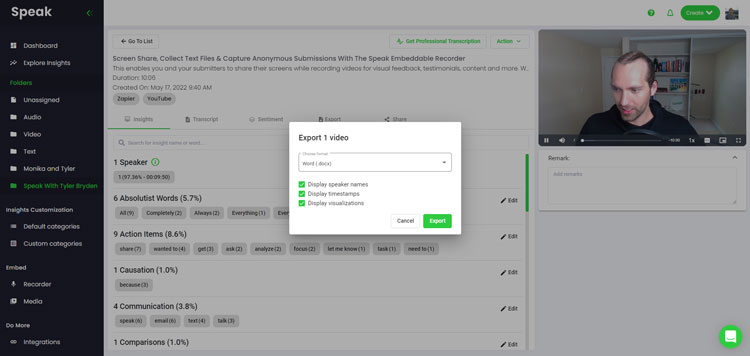
Step 6: Export your Chinese (Traditional) subtitles and share interactive media players
With Speak, you can easily export Chinese (Traditional) subtitles to many formats.
Below is a list of options for exporting your Chinese (Traditional) subtitles in Speak:
- Export Chinese (Traditional) subtitles to SRTs
- Export Chinese (Traditional) subtitles to VTTs
Een effectievere manier om ondertitels te delen is via een deelbare mediabibliotheek inclusief het mediabestand, AI-inzichten en interactieve ondertitels.
Met Speak kunt u nog veel meer doen om de waarde van uw media en ondertitels te vergroten.
Aarzel nooit om ons een bericht te sturen via live chat - we staan altijd klaar om te helpen!
We talked about Chinese (Traditional) subtitling here, but you may be interested in how to subtitle in other languages instantly and easily with Speak’s intuitive subtitling and natural language processing software.
Hieronder vindt u informatie over alle talen die u kunt spreken en die u kunnen helpen met ondertitelen!
Join 300,000+ users finding radical efficiencies with their audio, video and text data to drive value.
How Much Does It Cost To Subtitle Chinese (Traditional)?
Speak offers highly competitive pricing for Chinese (Traditional) subtitling compared to other subtitling solutions. For a starting user, Speak offers automated Chinese (Traditional) subtitling from 2 credits per hour of audio on pay as you go (1 credit = US$1). Pro includes 25 credits per user per month.
We schalen onze prijzen ook op basis van het mediavolume en kunnen zelfs grotere kortingen bieden aan grote klanten.
So, if you have over 100 hours of Chinese (Traditional) subtitling per month please contact us through live chat and we will set you up with a customized price per minute to make Chinese (Traditional) subtitling even more affordable!
You can learn more about how to subtitle Chinese (Traditional) with Speak and the relevant pricing on the Website prijzen pagina en de Prijzenpagina in de app.
What Can You Subtitle In Chinese (Traditional)?
- Subtitle Chinese (Traditional) interviews
- Subtitle Chinese (Traditional) videos
- Subtitle Chinese (Traditional) audio
- Subtitle Chinese (Traditional) earnings calls
- Subtitle Chinese (Traditional) focus groups
- Subtitle Chinese (Traditional) meetings
- Subtitle Chinese (Traditional) phone calls
- Subtitle Chinese (Traditional) YouTube videos
- Subtitle Chinese (Traditional) Vimeo videos
- Subtitle Chinese (Traditional) Zoom recordings
- Subtitle Chinese (Traditional) Google Meet recordings
- Ondertitel Microsoft Teams-opnames
- Subtitle Chinese (Traditional) podcasts
En nog veel meer!
Welke andere talen kunnen ondertiteling spreken?
Speak heeft al gebruikers uit meer dan 90 landen en we krijgen voortdurend verzoeken om te ondertitelen en analyses uit te voeren in verschillende talen.
Daarom voegen we voortdurend meer talen toe aan Speak! Dit zijn slechts enkele van de groeiende lijst van talen die Speak aanbiedt:
- Hoe maak je Afrikaanse ondertitels?
- Hoe maak je Arabische (Egypte) ondertitels
- Hoe maak je Arabische (Irak) ondertitels
- Hoe maak je Arabische (Israël) ondertitels
- Hoe maak je Arabische (Jordan) ondertitels
- Hoe maak je Arabische (Koeweitse) ondertitels
- Hoe maak je Arabische (Libanon) ondertitels
- Hoe maak je Arabische (Oman) ondertitels
- Hoe maak je Arabische (Palestijnse Autoriteit) ondertitels
- Hoe maak je Arabische (Qatar) ondertitels
- Hoe maak je Arabische (Saoedi-Arabië) ondertitels
- Hoe maak je Arabische ondertitels (Syrische Arabische Republiek)
- Hoe maak je Arabische ondertitels (Verenigde Arabische Emiraten)
- Hoe maak je Arabische moderne standaard (Bahrein) ondertitels
- Hoe maak je Armeense ondertitels
- Hoe maak je Bulgaarse ondertitels?
- Hoe maak je Catalaanse ondertitels?
- Hoe maak je Chinese (Kantonese, traditionele) ondertitels?
- Hoe maak je Chinese (vereenvoudigde) ondertitels
- Hoe maak je Chinese (traditionele) ondertitels
- Hoe maak je Kroatische ondertitels
- Hoe maak je Tsjechische ondertitels
- Hoe maak je Deense ondertitels
- Hoe maak je Nederlandse ondertitels?
- Hoe maak je Engelse ondertitels?
- Hoe maak je Engelse (Australische) ondertitels
- Hoe maak je Engelse (Indiase) ondertitels
- Hoe maak je Engelse (Ierse) ondertitels
- Hoe maak je Engelse (Nieuw-Zeelandse) ondertitels
- Hoe maak je Engelse (Schotse) ondertitels
- Hoe maak je Engelse (Zuid-Afrikaanse) ondertitels
- Hoe maak je Engelse (Verenigd Koninkrijk) ondertitels
- Hoe maak je Engelse (Verenigde Staten) ondertitels
- Hoe maak je Estische ondertitels?
- Hoe maak je Farsi-ondertitels?
- Hoe maak je Finse ondertitels
- Hoe maak je Franse ondertitels?
- Hoe maak je Franse (Canadese) ondertitels
- Hoe maak je Duitse ondertitels?
- Hoe maak je Duitse (Zwitserse) ondertitels
- Hoe maak je Griekse ondertitels
- Hoe maak je Gujarati-ondertitels
- Hoe je Hebreeuwse ondertitels maakt
- Hoe maak je Hindi-ondertitels?
- Hoe maak je Hongaarse ondertitels
- Hoe maak je IJslandse ondertitels?
- Hoe maak je Indonesische ondertitels
- Hoe maak je Ierse ondertitels?
- Hoe maak je Italiaanse ondertitels
- Hoe maak je Japanse ondertitels
- Hoe maak je Kannada-ondertitels?
- Hoe maak je Koreaanse ondertitels
- Hoe maak je Letse ondertitels?
- Hoe maak je Litouwse ondertitels?
- Hoe maak je Maleisische ondertitels
- Hoe maak je Malayalam-ondertitels?
- Hoe maak je Noorse ondertitels
- Hoe maak je Perzische ondertitels
- Hoe maak je Poolse ondertitels
- Hoe maak je Portugese ondertitels
- Hoe maak je Portugese (Braziliaanse) ondertitels
- Hoe maak je Portugese (Portugal) ondertitels
- Hoe maak je Roemeense ondertitels
- Hoe maak je Russische ondertitels
- Hoe maak je Slowaakse ondertitels
- Hoe maak je Sloveense ondertitels
- Hoe maak je Spaanse ondertitels?
- Hoe maak je Spaanse (Mexico) ondertitels
- Hoe maak je Zweedse ondertitels?
- Hoe maak je Tamil-ondertitels?
- Hoe maak je Telugu-ondertitels
- Hoe maak je Thaise ondertitels?
- Hoe maak je Turkse ondertitels
- Hoe maak je Oekraïense ondertitels
- Hoe maak je Vietnamese ondertitels
Er zijn er nu nog veel meer toegevoegd!
Je kunt zien de volledige lijst met talen die Speak ondersteunt via zowel de software als de API's.
Ontdek Speak AI
Speak AI is een platform voor spraaktechnologie en AI-onderzoek. Transcriptie in meer dan 100 talen, NLP-analyse, sentimentanalyse, AI-agenten en consultancy voor bedrijven.
 English
 Español
 Français
 Italiano
 العربية
 Português do Brasil
 Nederlands
 Deutsch
 עִבְרִית
 Русский
 日本語
 Polski
 Čeština
 Українська
 Slovenščina
 Svenska
 Ελληνικά
 Norsk bokmål
 简体中文
 Türkçe
 Català
 Magyar
 한국어
 Slovenčina
 Suomi