
How To Translate German (Swiss) to English
Translating German (Swiss) to English is super simple!
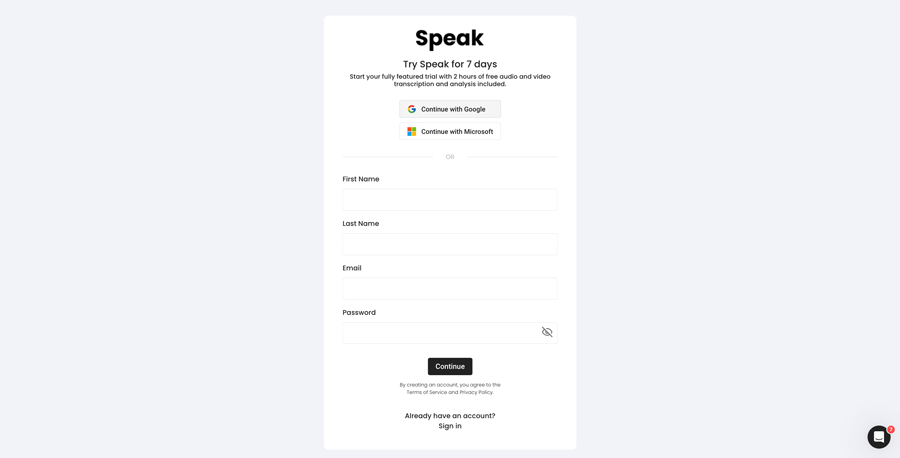
步骤 1:注册 Speak
使用以下方式注册 Speak 此链接.
Once you register, you can instantly begin translating your German (Swiss) to English file(s).
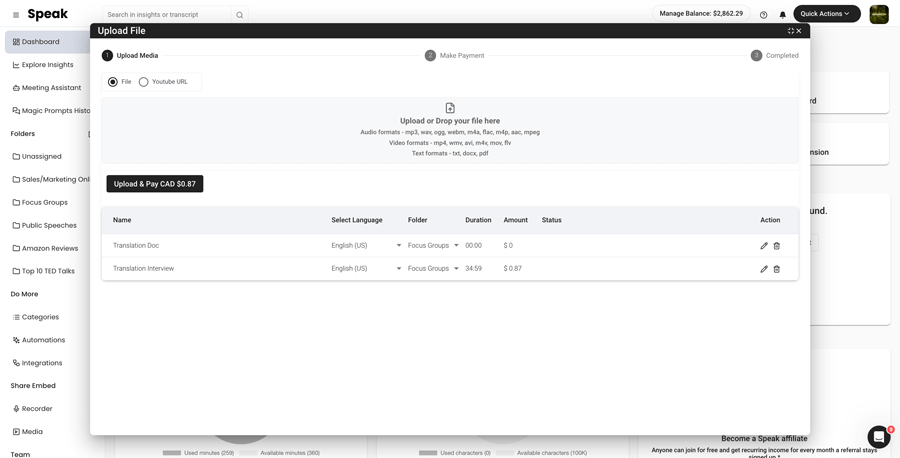
Step 2: Upload Your German (Swiss) file(s)
登录后,您将立即被重定向到仪表板。
到达那里后,你可以选择快速操作 “新上传”。
在 Speak 中,您可以一次性无缝上传、转录和翻译音频、视频和文本文件!如果您有视频,可以使用我们的 AI 视频文本转换器 将视频转换为文本;如果有音频,可以使用我们的 AI 音频到文本转换器 将音频转换为文本。您还可以 转录 YouTube 视频 和 用人工智能分析文本.
支持的音频和视频格式
- 将 MP4 转换为文本
- 将 M4A 转为文本
- 将 MP3 转换为文本
- 将 OGG 转为文本
- 将 MPEG 转换为文本
- 将 WEBM 转换为文本
- 将 MOV 转换为文本
- 将 M4P 转为文本
- 将 WMV 转换为文本
- 将 WAV 转换为文本
- 将 M4V 转换为文本
- 音频视频转文字
- 将 AVI 转换为文本
- 将视频转换为文章
支持的转录语言
- 如何转录南非荷兰语
- 如何转录埃及阿拉伯语
- 如何转录阿拉伯语伊拉克方言
- 如何转录阿拉伯以色列语
- 如何转录阿拉伯约旦语
- 如何转录阿拉伯科威特语
- 如何转录阿拉伯语黎巴嫩方言
- 如何转录阿拉伯现代标准巴林语
- 如何转录阿拉伯现代标准语
- 如何转录阿拉伯语阿曼方言
- 如何转录阿拉伯巴勒斯坦权力机构
- 如何转录卡塔尔阿拉伯语
- 如何转录阿拉伯语沙特阿拉伯
- 如何转录阿拉伯叙利亚阿拉伯共和国
- 如何转录阿联酋阿拉伯语
- 如何转录亚美尼亚语
- 如何转录保加利亚语
- 如何转写加泰罗尼亚语
- 如何转录中文粤语繁体
- 如何转录简体中文
- 如何转录克罗地亚语
- 如何转录捷克语
- 如何转录丹麦语
- 如何转录荷兰语
- 如何转录英语澳大利亚方言
- 如何转录英式英语
- 如何转录印度英语
- 如何转录爱尔兰英语
- 如何转录英语新西兰
- 如何转录英文苏格兰语
- 如何转录英语南非口音
- 如何转录英国英语
- 如何转录英语美国口音
- 如何转录爱沙尼亚语
- 如何转录波斯语
- 如何转录芬兰语
- 如何转录加拿大法语
- 如何转录瑞士德语
- 如何转录德语
- 如何转录希腊语
- 如何转录古吉拉特语
- 如何转录希伯来语
- 如何转录印地语
- 如何转录匈牙利语
- 如何转录冰岛语
- 如何转录印度尼西亚语
- 如何转录访谈
- 如何转录爱尔兰语
- 如何转录意大利语
- 如何转录日语
- 如何转录卡纳达语
- 如何转录韩语
- 如何转录拉脱维亚语
- 如何转录立陶宛语
- 如何转录马来语
- 如何转录马拉雅拉姆语
- 如何转录挪威语
- 如何转录波斯语
- 如何转录波兰语
- 如何转录巴西葡萄牙语
- 如何转录葡萄牙语葡萄牙
- 如何转录葡萄牙语
- 如何转录罗马尼亚语
- 如何转录俄语
- 如何转录斯洛伐克语
- 如何转录斯洛文尼亚语
- 如何转录墨西哥西班牙语
- 如何转录瑞典语
- 如何转录泰米尔语
- 如何转录泰卢固语
- 如何转录泰语
- 如何转录土耳其语
- 如何转录乌克兰语
- 如何转录越南语
- 转录丹麦语
- 转录英语
- 转录法语
- 转录德语
- 转录葡萄牙语
- 转录西班牙语
我们还有一个 人工智能会议助理 和 人工智能记事本 自动捕捉会议以及 录音机, 可嵌入式录音机和录像机和 屏幕录制.
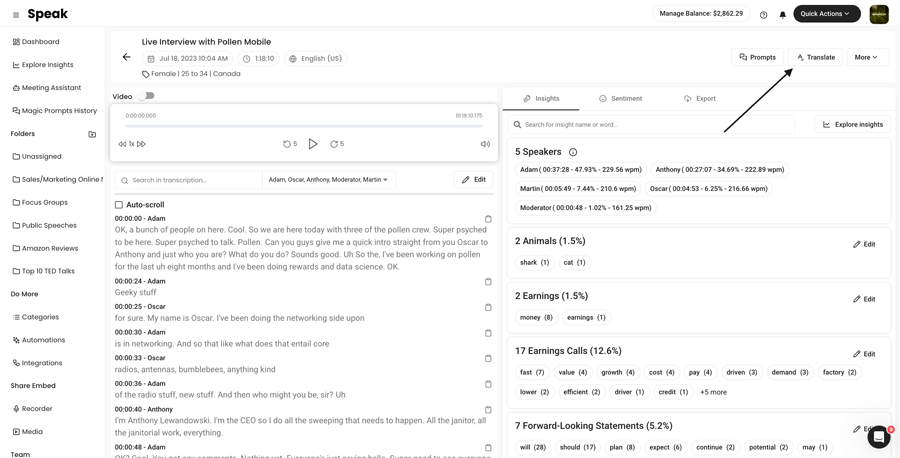
Step 3: Translate Your German (Swiss) file(s) to English
文件上传后,只需访问您的文件并选择 “翻译”
如果是音频和视频文件,Speak 会询问您是否希望在翻译中保留说话人姓名和时间戳。
想要一次转录多个文件?没问题!
You can view the files you want to automatically translate from German (Swiss) to English from the folder level and instantly translate as many files as you need with our artificial intelligence translation in just a few clicks.
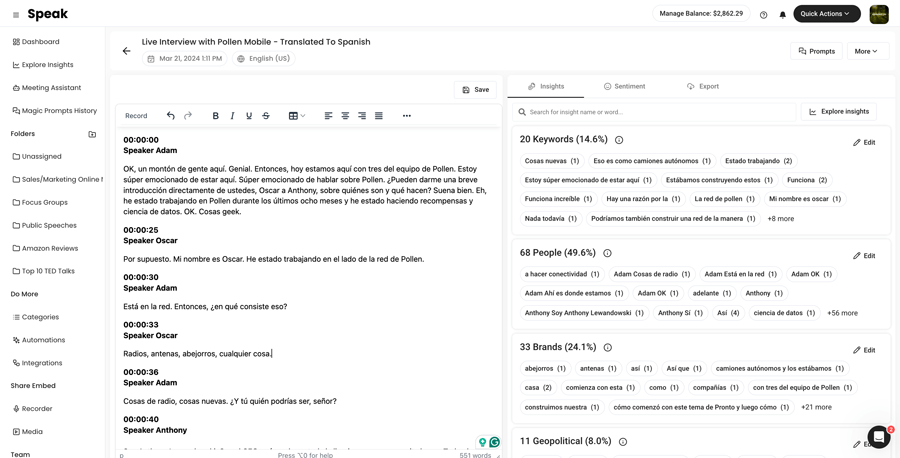
步骤 4:完成!查看、分析、修改 & 导出您的新英文文件
翻译完成后,您将收到警报,并在原始文件所在的同一文件夹中看到一个新文档。
该文件将使用相同的名称,但带有破折号表示这是翻译版本。
Need support with your German (Swiss) translation?
我们始终在这里,很乐意为您效劳 Speak!
只需在右下角的实时聊天中向我们发送消息,我们将确保您获得成功所需的支持。
Interested in translating German (Swiss) or other languages to different languages? View our entire list of supported translation 此处的语言.
Automatic, accurate, instant AI translation from German (Swiss) to English is here for you.
使用以下方式注册 Speak 此链接 and begin translating German (Swiss) to English today.
Unlocking Global Communication: The Power of Translating German (Swiss) to English
In the interconnected world we live in, the ability to communicate effectively across language barriers is not just an advantage; it’s essential. Swiss German to English translation, especially facilitated by AI and automatic translation technologies, offers a bridge between cultures, economies, and industries. Speak AI, with its cutting-edge NLP, transcription software, and AI Meeting Assistant, is at the forefront of making these translations not only possible but also accurate and efficient.
Why Translate German (Swiss) to English?
German (Swiss), while similar to Standard German, possesses unique qualities and nuances that require special consideration during translation. English, a global lingua franca, opens doors to international business, research, and collaboration opportunities. The translation from Swiss German to English allows for:
– Enhanced Business Operations: Businesses can expand their reach, access new markets, and build relationships with partners and customers globally.
– Academic and Research Collaboration: Researchers can share findings, collaborate on projects, and access a broader database of knowledge.
– Efficient Information Exchange: Instant translation technologies enable real-time communication, breaking down language barriers in meetings and conferences.
成本和时间效率
The traditional translation process can be time-consuming and expensive. However, with Speak AI’s automatic translation capabilities:
– Reduce Translation Time: Instant translation of audio, video, and text materials eliminates lengthy wait times associated with manual translations.
– Cost-Effective Solutions: Automating the translation process significantly reduces costs, making it an affordable option for businesses and researchers alike.
– Ensure Accuracy: Speak AI’s technology is designed to understand and translate the nuances of Swiss German, resulting in precise and reliable translations.
How Speak AI Enhances Translation from German (Swiss) to English
Speak AI’s integrated NLP, large language models, and AI Meeting Assistant revolutionize how translation is approached by:
– Seamless Integration in Meetings: AI Meeting Assistant joins platforms like Microsoft Teams, Zoom, Google Meet, and Webex calls to automatically transcribe and analyze conversations in real-time.
– 数据可视化: Translate and visualize data for easier understanding and decision-making in multinational teams.
– Generative AI for Rich Content: Beyond translation, generating summaries, insights, and action points from the transcribed text.
Use Cases Tailored for Researchers and Businesses
– International Research Collaborations: Automatically translate research papers, facilitating global partnerships.
– Global Business Expansion: Product manuals, websites, and marketing materials translated effortlessly, ensuring consistent messaging across different languages.
– Cross-Border Customer Support: Offer support in Swiss German and English, improving customer satisfaction and loyalty.
Understanding the Linguistic Landscape
Popularity and Distribution
Swiss German is predominantly spoken in Switzerland, a country with a rich multilingual heritage, whereas English, as the world’s third most spoken language, has over 1.5 billion speakers globally.
Key Differences and Similarities
– Differences: Swiss German differs significantly in phonetics, vocabulary, and syntax from Standard German. English, with its Germanic roots, shares some similarities but also has vast differences, notably in grammar and vocabulary.
– Similarities: Both languages have Germanic roots, leading to some lexical similarities. This shared heritage can facilitate the translation process, especially when powered by AI that understands these nuances.
Fun Facts: Bridging Cultures through Language
– Swiss German boasts numerous dialects, varying greatly from region to region.
– English incorporates words from over 350 languages, reflecting its global nature.
– Switzerland’s multilingualism means many Swiss Germans are already proficient in English, highlighting the importance of seamless translation for nuanced communication.
Conclusion: The Future Is in Automatic Translation
Advancements in AI and NLP technologies suggest a future where language barriers cease to obstruct global communication. Services like Speak AI not only make translating from German (Swiss) to English more accessible but also ensure these translations are more accurate and nuanced than ever before. The era of seamless, instant communication across languages is here, heralding new opportunities for collaboration, understanding, and connectivity across the globe.
Speak AI is committed to leading this change, driven by its highly rated AI Meeting Assistant, powerful NLP and AI capabilities, and dedication to breaking down language barriers for over 150K users worldwide. Experience the future of translation and take your business and research to a global stage with Speak AI.
—
常问问题
What locations are German (Swiss) and English popular?
German (Swiss) is primarily spoken in Switzerland, a country known for its linguistic diversity. English, on the other hand, is a global language spoken by an estimated 1.5 billion people worldwide, serving as the primary language in countries such as the United States, the United Kingdom, Canada, Australia, and many others.
Give interesting stats on countries, populations, and history.
Switzerland has a population of approximately 8.5 million people, with Swiss German being the most spoken language in the country. English, as the third most spoken language in the world, plays a pivotal role in international business, science, and pop culture, emphasizing the importance of effective translation services.
What are some fun facts about German (Swiss) and English?
Swiss German is not a written language; it’s primarily spoken, making the translation into written English a unique challenge. English has absorbed vocabulary from over 350 languages throughout its history, showcasing its adaptability and global reach.
What are the differences and similarities between German (Swiss) and English?
The main differences lie in grammar, vocabulary, and pronunciation, with Swiss German having numerous dialects that differ significantly from standard German. The similarities between the two, stemming from their Germanic roots, aid in the translation process, especially when leveraging AI technologies capable of understanding these nuanced aspects.
Translate German (Swiss) To These Other Supported Languages:
常见问题解答
How do I translate Swiss German to English?
Register for Speak, upload your German (Swiss) file, choose English as the target language, then view, analyze, edit and export the translated file.
Can I translate Swiss German audio or video to English?
Yes. Upload the recording and Speak AI transcribes the speech, then translates the transcript into English. Dialect-heavy audio can be harder to transcribe, so review the result before relying on it.
Is Swiss German the same as standard German?
No. Swiss German is a group of Alemannic dialects that are mostly spoken, while written Swiss text normally uses Standard German with some local spelling differences.
Can I edit the English translation?
Yes. After translation you can view the English file, edit it, run AI analysis on it and export it from Speak AI.
Translate & Transcribe with Speak AI
Speak AI supports transcription and analysis in 100+ languages. Upload your audio or video and get instant AI-powered transcription, translation assistance, and NLP analytics.
 English
 Español
 Français
 Italiano
 العربية
 Português do Brasil
 Nederlands
 Deutsch
 עִבְרִית
 Русский
 日本語
 Polski
 Čeština
 Українська
 Slovenščina
 Svenska
 Ελληνικά
 Norsk bokmål
 简体中文
 Türkçe
 Català
 Magyar
 한국어
 Slovenčina
 Suomi